Beginner’s Guide
In this Vaping News guide, we break down what vape coil resistance actually means and how choosing the wrong one can ruin your experience.
You buy a replacement vape coil and suddenly see numbers like 0.6Ω, 0.8Ω, 1.0Ω, and 1.2Ω printed on the packaging. Nobody explains what these numbers actually mean. You choose one randomly, install it, and suddenly your vape feels completely different. Maybe the vapour feels too hot. Maybe the flavour tastes weak. Maybe the coil burns out after only a few days.
You can also explore NHS guidance on vaping and quitting smoking for more health-focused information.
This is one of the most common problems faced by UK vapers moving from disposable vapes to refillable pod kits. Disposable devices handled all these settings automatically. Refillable systems give you more control, but that also means understanding how coil resistance affects your vaping experience.
The good news is that coil resistance is much easier to understand than it first appears. Once you understand how it affects heat, airflow, vapour production, nicotine strength, and battery life, choosing the right coil becomes far less confusing.
TABLE OF CONTENTS
- What Is Vape Coil Resistance?
- How Coil Resistance Changes the Vaping Experience
- Understanding MTL, RDL & DTL Vaping
- Which Coil Resistance Is Best for Beginners?
- Coil Resistance and Nicotine Strength
- Matching E-Liquid to Coil Resistance
- How Coil Resistance Affects Battery Life
- 0.6Ω vs 0.8Ω: Which One Should You Choose?
- How to Make Your Coils Last Longer
- Common Beginner Mistakes
- Final Thoughts
QUICK OVERVIEW
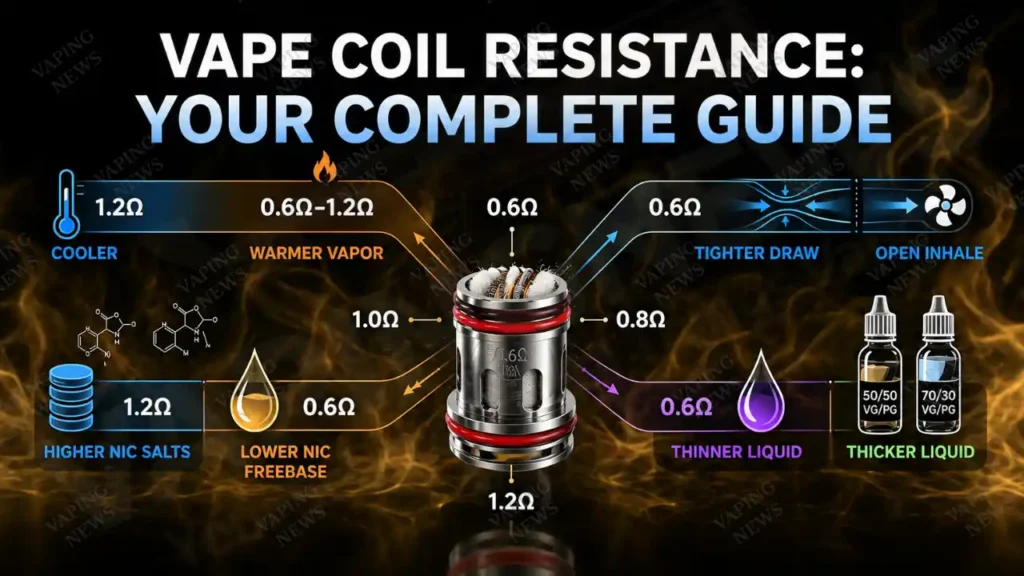
✓ Higher resistance coils (1.0Ω–1.2Ω) provide a tighter draw, cooler vapour, and work best with nicotine salts.
✓ Lower resistance coils (0.6Ω–0.8Ω) produce warmer vapour, stronger flavour, and more visible clouds.
✓ Matching your coil with the correct nicotine strength and VG/PG ratio improves flavour, battery life, and coil longevity.
✓ Understanding coil resistance helps you avoid burnt coils, harsh throat hits, leaking, and other common beginner mistakes.
What Is Vape Coil Resistance?
Inside every vape pod or tank is a small heating element called a coil. When you inhale or press the fire button, electricity passes through the coil and heats it up. That heat turns e-liquid into vapour.
Resistance is measured in ohms, shown with the symbol Ω. The resistance level controls how much power flows through the coil.
A lower resistance coil allows more power through. This creates more heat, stronger flavour, and larger vapour clouds. A higher resistance coil restricts power, producing cooler vapour and a tighter inhale that feels more similar to smoking.
In simple terms, lower resistance means more vapour and warmth, while higher resistance means a cooler and tighter vaping experience.
How Coil Resistance Changes the Vaping Experience
Many beginners think resistance numbers are just technical specifications, but they directly affect how your vape actually feels.
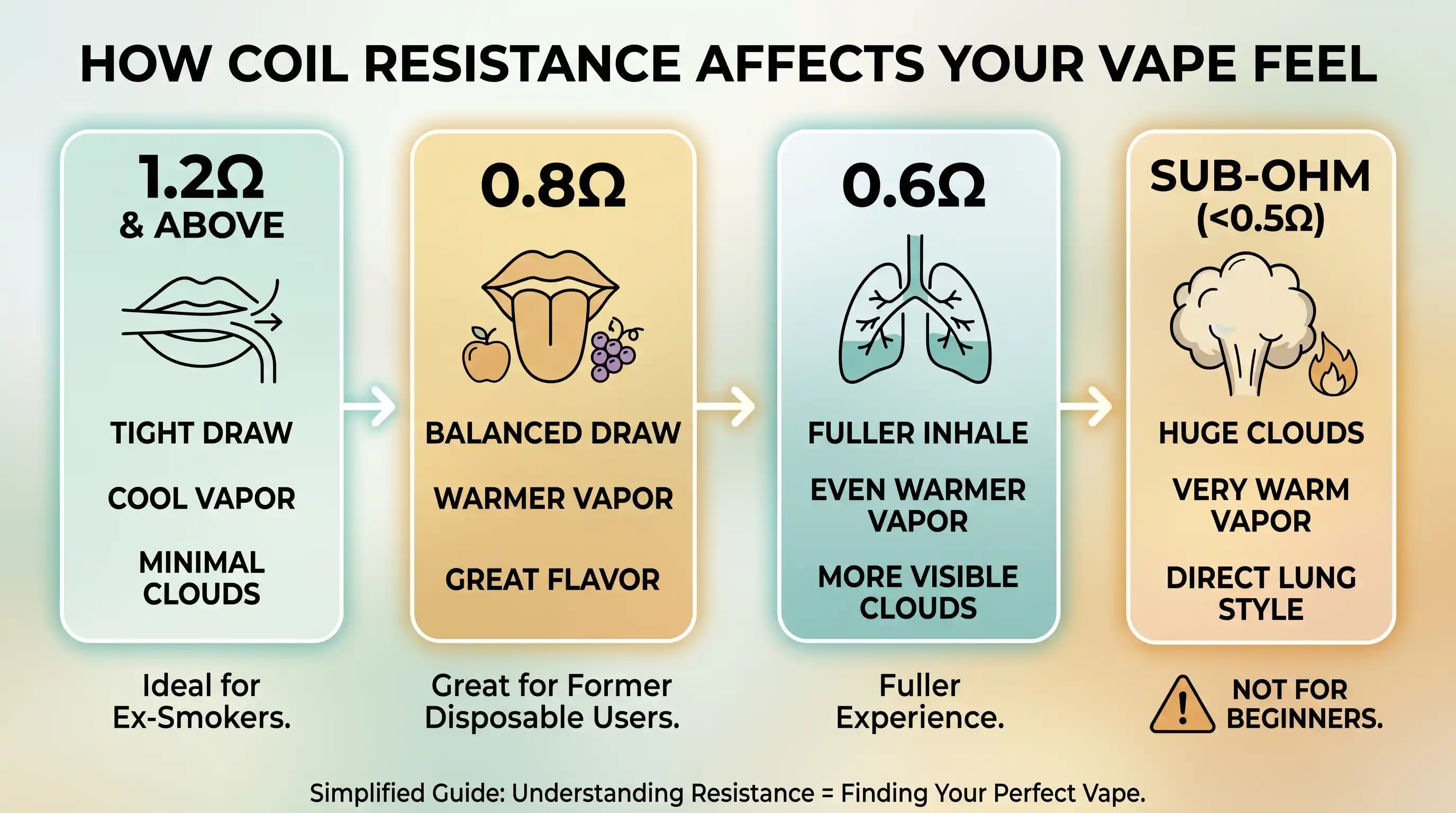
A 1.2Ω coil produces a very tight draw with cooler vapour and minimal visible clouds. This setup feels closest to smoking a traditional cigarette and is often preferred by heavy ex-smokers.
A 1.0Ω coil still feels tight and controlled but offers slightly smoother airflow and a more balanced inhale.
At 0.8Ω, the vapour becomes warmer, and the flavour becomes more noticeable. Many former disposable vape users find this resistance level comfortable because it balances flavour, airflow, and nicotine satisfaction very well.
A 0.6Ω coil produces even warmer vapour with stronger flavour and more visible clouds. The inhale feels more open and fuller.
Once you move below 0.5Ω, you enter sub-ohm vaping territory. These coils produce large clouds, very warm vapour, and require direct lung inhalation. They are generally not recommended for beginners.
Understanding MTL, RDL & DTL Vaping
Coil resistance also determines your vaping style.
Mouth-to-lung MTL vaping works similarly to smoking. You pull the vapour into your mouth first before inhaling it into your lungs. This style usually uses coils rated at 1.0Ω or higher. It works best with nicotine salts and suits ex-smokers who want a tighter draw.
RDL, or restricted direct lung vaping, sits between MTL and full direct lung vaping. It uses coils around 0.6Ω to 0.8Ω and offers warmer vapour, more flavour, and slightly more airflow.
DTL, or direct-to-lung vaping, involves inhaling vapour directly into the lungs. This style uses coils below 0.5Ω and is designed for large cloud production and low nicotine strengths.
Most disposable vape users are already using a setup that feels somewhere between MTL and RDL, even if they do not realise it.
Which Coil Resistance Is Best for Beginners?
The best coil resistance depends entirely on your background and what type of vaping experience you want.
If you are an ex-smoker looking for something that feels similar to cigarettes, a 1.0Ω to 1.2Ω coil paired with nicotine salts is usually the best starting point. The tighter airflow and stronger nicotine delivery feel more familiar.
If you are switching from disposable vapes, starting with a 0.8Ω to 1.0Ω coil usually provides the smoothest transition because many disposables already operate within this range.
If your main goal is stronger flavour and slightly warmer vapour, a 0.6Ω to 0.8Ω coil is often the better choice.
Cloud chasers who want large vapour production typically use coils below 0.5Ω, but these setups require higher-powered devices and are generally better suited to experienced vapers.
Coil Resistance and Nicotine Strength
One of the biggest mistakes beginners make is using the wrong nicotine strength with the wrong coil resistance.
Higher resistance coils work best with stronger nicotine levels because they produce less vapour per puff. Coils rated at 1.0Ω or above usually pair well with 10mg to 20mg nicotine salts.
Medium resistance coils between 0.6Ω and 0.8Ω work better with lower nicotine strengths, such as 5mg to 10mg nic salts or 6mg freebase nicotine.
Sub-ohm coils below 0.5Ω should only be used with very low nicotine strengths, typically between 0mg and 6mg freebase nicotine. Using high-strength nicotine salts in low-resistance coils can feel extremely harsh and may cause dizziness or nausea.
Matching E-Liquid to Coil Resistance
Choosing the correct e-liquid is just as important as choosing the right coil.
Higher resistance coils need thinner liquids, such as 50/50 VG/PG blends or high-PG liquids. These liquids absorb properly through the smaller wicking ports found in high-resistance coils.
Medium resistance coils usually work well with 50/50 or 60/40 VG/PG liquids.
Sub-ohm coils require much thicker high-VG liquids, usually 70/30 VG/PG or higher. Thin liquids flood these coils and often cause leaks.
How Coil Resistance Affects Battery Life
Lower-resistance coils use significantly more battery power.
A high-resistance 1.0Ω coil running at low wattage may last most of the day on a single charge. A 0.3Ω sub-ohm coil running at high wattage drains batteries far more quickly.
If battery life matters to you, higher resistance coils are generally much more efficient.
0.6Ω vs 0.8Ω: Which One Should You Choose?
This is one of the most common questions among UK vapers.
A 0.6Ω coil produces warmer vapour, stronger flavour, and larger clouds. It suits people who use lower nicotine strengths and want a fuller inhale.
A 0.8Ω coil provides a smoother and cooler vape with better battery efficiency. It works especially well for ex-smokers and disposable vape users who use stronger nicotine salts.
Neither option is objectively better. The right choice depends entirely on what type of experience you prefer.
Why Vape Coils Burn Out
Most vape coils last around one to two weeks, but several things can shorten coil life dramatically.
Using wattages above the recommended range burns coils quickly. Sweet e-liquids also leave residue on coils faster, especially dessert flavours.
Chain vaping without pauses can dry out the cotton wick inside the coil and cause burnt hits.
One of the biggest mistakes beginners make is not priming the coil before first use. A dry coil fired too early often burns instantly.
How to Make Your Coils Last Longer
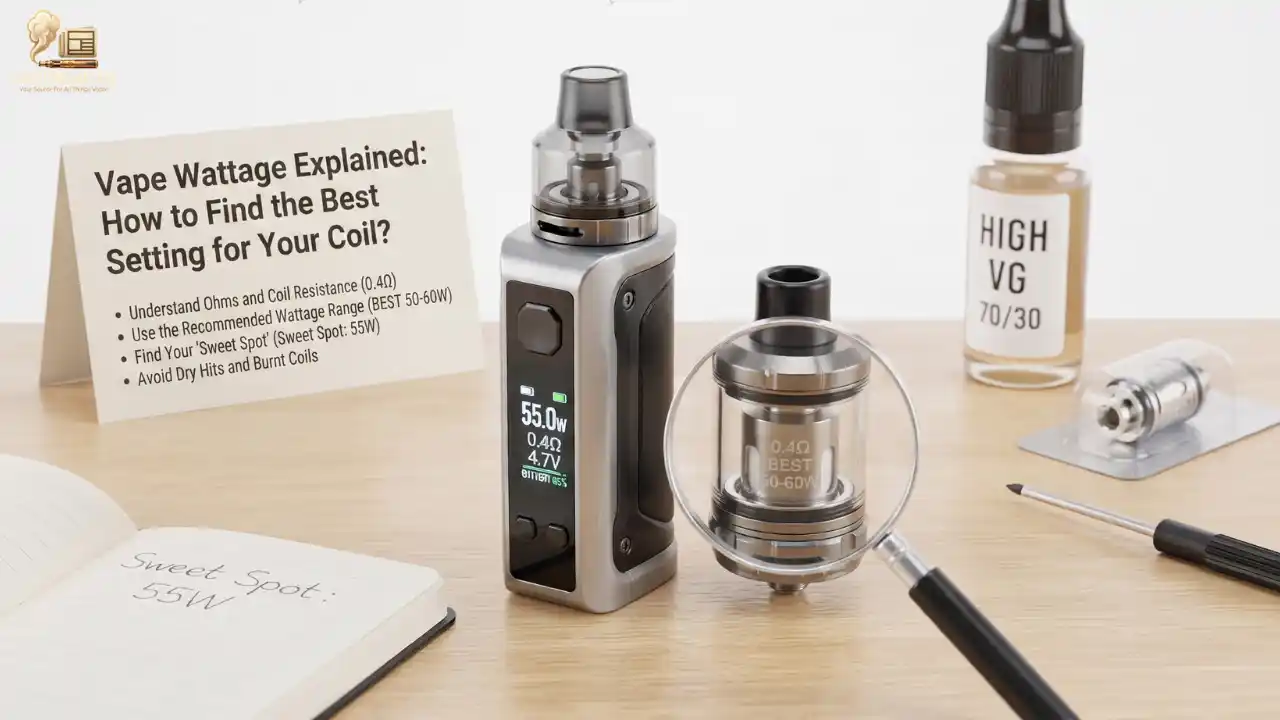
To extend coil lifespan: Stay within
- the recommended wattage range;
- Avoid chain vaping. Constantly
- keep your tank filled with e-liquid
- Use the correct VG/PG ratio,
- rotate between flavours instead of only using very sweet liquids
Priming your coil properly before first use also makes a major difference.
Common Beginner Mistakes
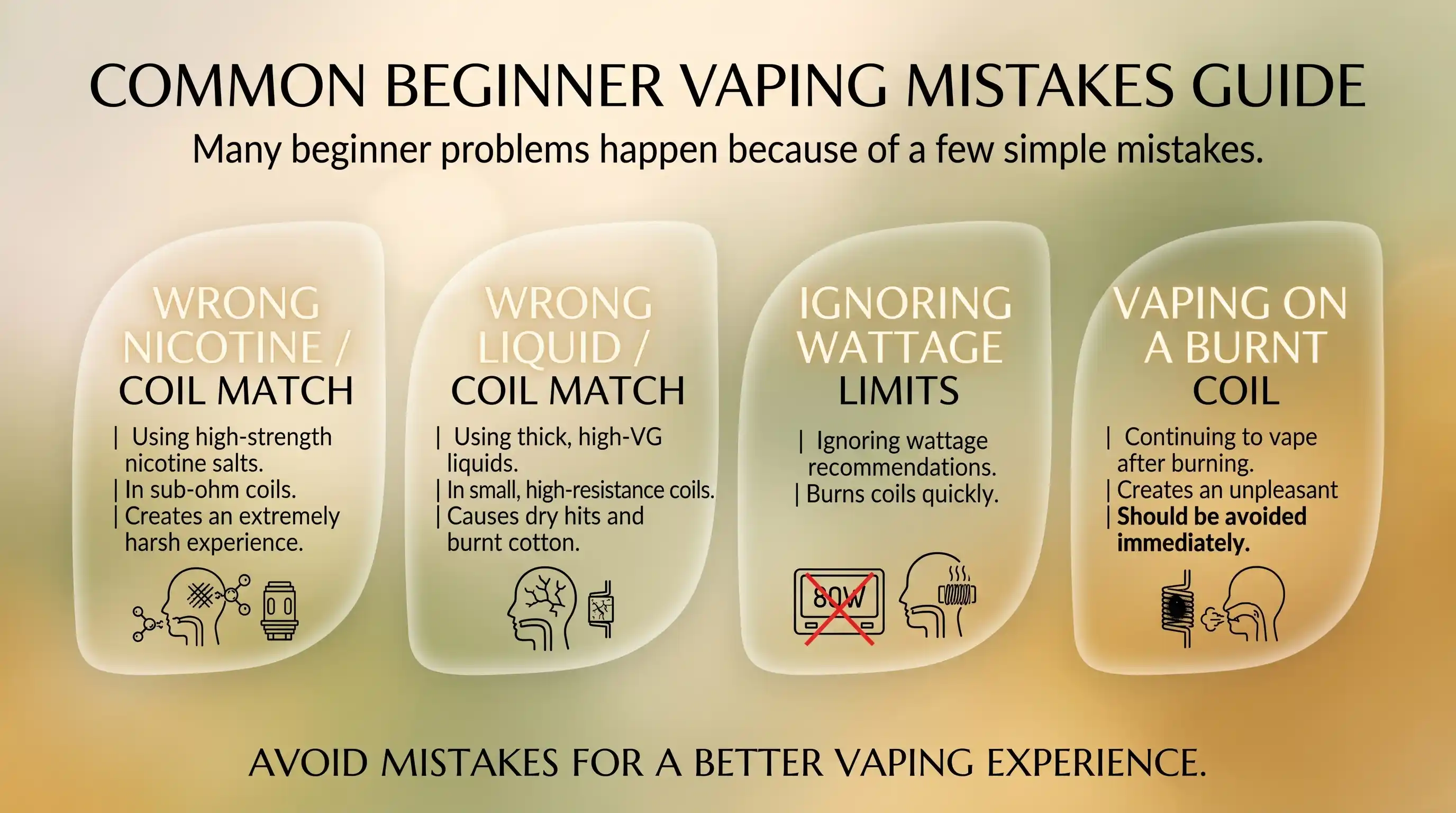
Many beginner problems happen because of a few simple mistakes.
Using high-strength nicotine salts in sub-ohm coils creates an extremely harsh experience.
Using thick high-VG liquids in small high-resistance coils causes dry hits and burnt cotton.
Ignoring wattage recommendations burns coils quickly.
Continuing to vape on a burnt coil creates an unpleasant flavour and should be avoided immediately.
Final Thoughts
Vape coil resistance controls almost every part of your vaping experience. It affects vapour warmth, flavour intensity, airflow, battery life, nicotine satisfaction, and e-liquid compatibility.
Choosing the right resistance helps create a smoother and more enjoyable vape while avoiding common beginner problems like burnt coils, leaking, or harsh throat hits.
If you are moving from smoking, start with higher resistance coils. If you want more flavour and warmth, move slightly lower.
Most importantly, make sure your nicotine strength and e-liquid match your coil properly. Once everything works together correctly, vaping becomes far more consistent and satisfying.
Explore more from Vaping News:
- Best Sub-Ohm Vape Kits UK 2026
- MTL vs DTL Vaping: Which Style Is Right for You?
- Prefilled Pod Kits vs Refillable Pods UK
Learn More: For a broader perspective on vaping and smoking, see this feature published by The Guardian.