What you need to know
The UK vaping industry is entering one of the biggest transition periods it has ever faced. In recent years, vaping has evolved from a rapidly growing smoking alternative to a contentious public health debate. It’s hard to tell what’s actually happening and what’s just speculation.
At Vaping News, we have seen increasing concern from regular vapers asking the same questions repeatedly. Are disposable vapes completely banned? Will vape flavours disappear? How expensive will vaping become after the new tax arrives? Which rules are already confirmed and which ones are still only proposals?
The confusion exists because many websites mix rumours with confirmed laws. Many articles present proposed restrictions as if they’re already the law. This creates panic and misinformation.
This guide breaks everything down clearly. You’ll learn:
- Which vape regulations are officially confirmed in the UK?
- Which proposals are still under consultation?
- How these changes could affect your daily vaping costs.
- What practical steps should you consider before the biggest regulations arrive between 2025 and 2027?
Why UK Vape Regulations Are Changing
The UK government says the new regulations are mainly focused on two major concerns:
- rising youth vaping rates
- environmental waste caused by disposable vapes
Disposables became extremely popular. They were cheap, colourful, simple to use, and widely available.
However, regulators argued these same factors made them attractive to underage users.
Environmental concerns also became difficult to ignore.
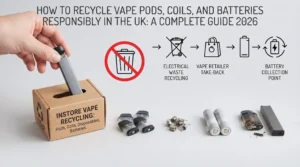
Across the UK, millions of disposable devices were reportedly being thrown away every week. This was before the upcoming disposable vape ban. These products contained lithium batteries and plastic waste that were rarely recycled correctly.
At the same time, the government still publicly supports vaping as a harm reduction alternative for adult smokers. This means the UK is not banning vaping entirely.
Understanding Confirmed vs Proposed Vape Laws
One of the biggest mistakes people make when reading vape news is assuming every proposed idea automatically becomes law.
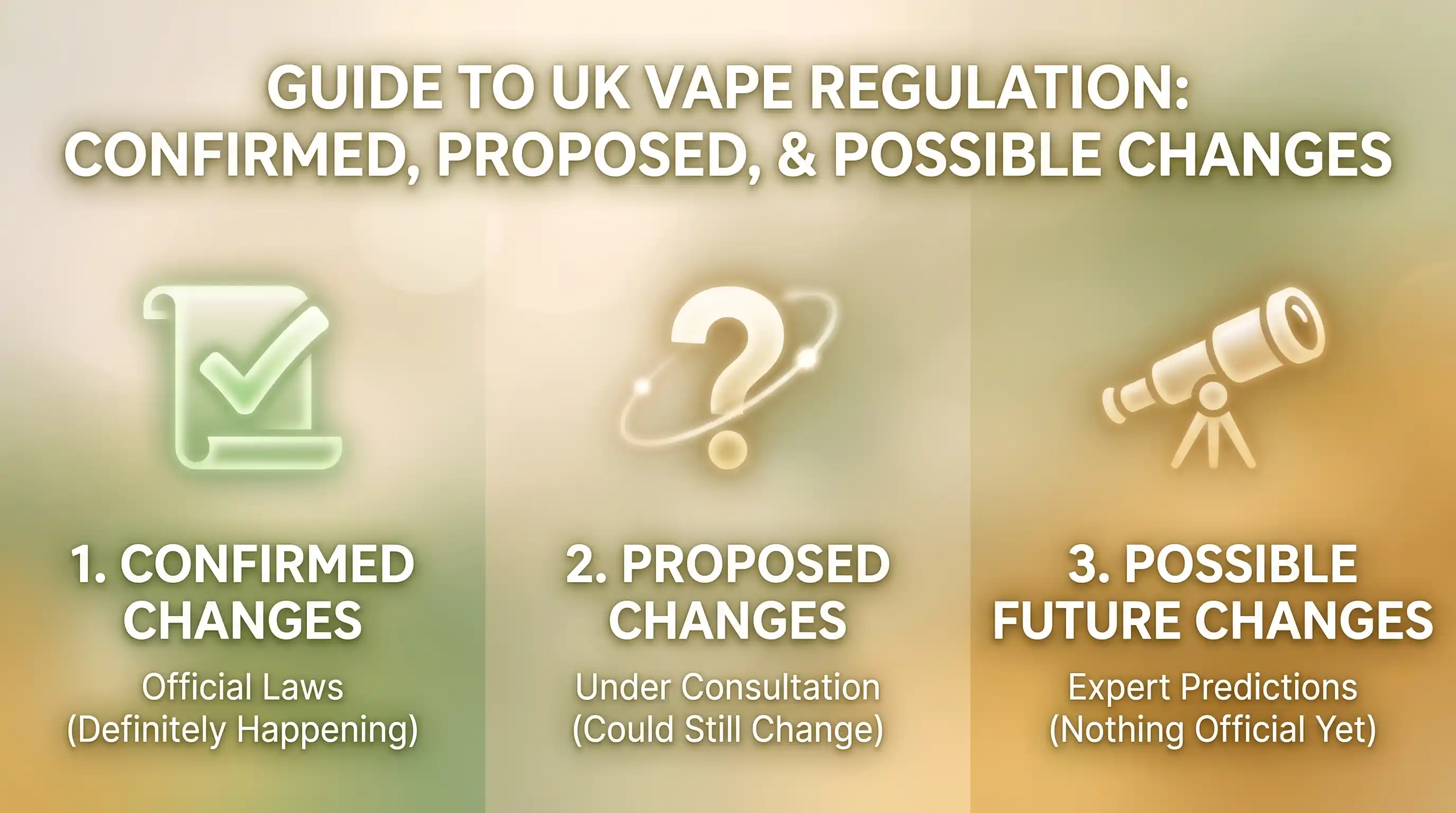
In reality, UK vape regulation discussions currently fall into three categories.
Confirmed Changes
These are official laws that will definitely happen unless legislation changes unexpectedly.
Proposed Changes
These ideas are currently under consultation. They could still change significantly before becoming law.
Possible Future Changes
These are directions many experts believe UK regulations may move toward later. However, nothing official has been confirmed yet.
Understanding the difference matters. Many online rumours currently exaggerate what is actually happening.
The UK Vape Regulation Timeline Between 2025 and 2027
Several major changes are already confirmed for the UK vaping market.
The biggest confirmed developments include:
- The disposable vape ban
- The vape duty tax
- The rollout of duty stamp systems
Other potential restrictions are still under consultation. These include flavour bans and plain packaging. They are not yet fully confirmed.
Confirmed Change #1: The UK Disposable Vape Ban
The disposable vape ban is one of the biggest confirmed changes affecting UK vapers.
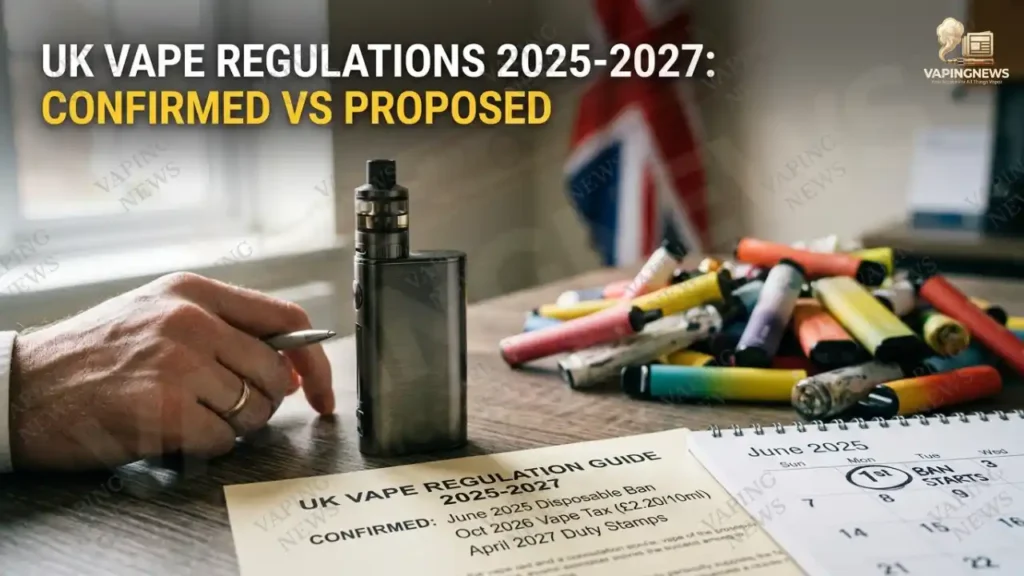
From June 2025, it will be illegal to sell single-use disposable vapes in the UK. This ban applies to devices that are both non-rechargeable and non-refillable.
This includes:
- standard 600 puff disposables
- larger single-use devices
However, not every vape product disappears under this law.
Devices that remain legal include:
- refillable pod kits
- prefilled pod systems
- rechargeable vape kits
- certain large puff rechargeable devices
This means vaping itself is not being banned. The regulation specifically targets single-use disposable products.
Why the Disposable Ban Was Introduced
The government introduced the ban mainly because of environmental and youth vaping concerns.
Before the ban, millions of disposable devices were reportedly being thrown away every week in the UK.
The batteries and plastic components in these products were rarely recycled properly. This created a growing environmental waste problem.
Regulators also argued that brightly coloured disposable devices increased youth appeal. They pointed to sweet flavour marketing as another factor.
Whether users agree with these arguments or not, the direction of regulation is now clear.
Best Alternatives to Disposable Vapes
Many former disposable vape users are now switching to rechargeable alternatives.
For beginners, prefilled pod kits often provide the easiest transition. They still feel simple and convenient.
More experienced users increasingly move toward refillable pod systems because they provide:
- lower long-term costs
- better flavour flexibility
- improved device lifespan
Heavy users may also prefer larger rechargeable big puff devices. These provide longer usage between refills or charges.
Here at Vaping News, we see this trend firsthand. Former disposable users are adapting to refillable systems surprisingly quickly. The switch often happens once they understand how much money they can save in the long term.
Confirmed Change #2: The UK Vape Tax
Another major confirmed regulation is the upcoming vape duty tax arriving in October 2026.
This new regulation introduces a £2.20 tax per 10ml of e-liquid.
The tax affects:
- nicotine salts
- standard e-liquids
- prefilled pod products
Many users underestimate how much this could increase long-term vaping costs.
How Much More Expensive Will Vaping Become?
Once VAT gets added on top of the new vape duty tax, prices could rise significantly.
For example, a 10ml bottle currently costing around £4 may increase to around £6 or more after tax changes apply.
For regular users, this creates noticeable yearly cost increases.
Heavy vapers could end up spending hundreds of pounds more annually if their habits stay unchanged.
Many users are already adjusting their habits early.
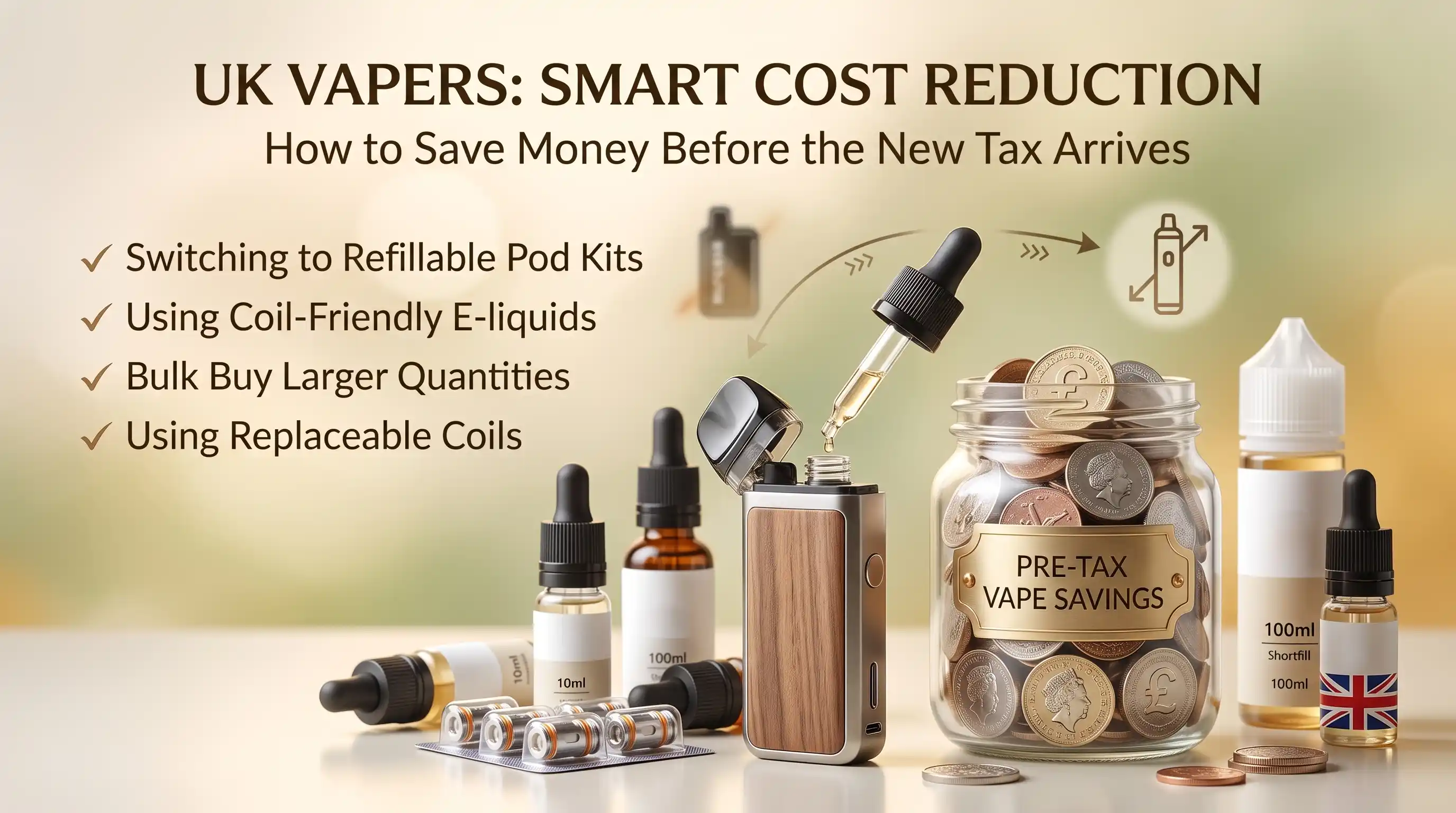
Some of the most effective ways to reduce future vaping costs include:
- switching to refillable pod kits
- using coil-friendly e-liquids
- avoiding expensive disposable alternatives
- buying larger quantities where appropriate
- using refillable systems instead of prefilled pods
Refillable setups will likely become even more financially important after the tax begins.
Confirmed Change #3: Vape Duty Stamp Systems
Another confirmed development is the introduction of vape duty stamps between 2025 and 2027.
These stamps will function similarly to tobacco duty markings.
By April 2027, legal vape products sold in the UK will require official duty stamp verification.
The goal is to reduce counterfeit and black-market vape products. It also aims to improve product tracking and compliance enforcement.
Proposed Change: Vape Flavour Restrictions
This is currently one of the most misunderstood topics in the UK vape industry.
Despite online rumours, flavour bans are not currently confirmed as law.
The government is discussing possible restrictions under consultation. This includes limiting flavours to simpler options like tobacco or menthol.
However, no final decision currently exists.
This is a controversial topic. Many adult ex-smokers say flavoured vape products helped them quit smoking cigarettes.
Proposed Change: Plain Packaging
Plain packaging rules are also being discussed.
The proposals could need standardised packaging. This would mean reduced branding and simpler product presentation.
Again, these changes remain under consultation rather than confirmed legislation.
Possible Future Vape Restrictions
Several other possible restrictions may appear later, depending on how UK regulation develops.
Possible future directions include:
- vape retail licensing systems
- stricter advertising limitations
- display restrictions in shops
- expanded product regulations
None of these is fully confirmed yet.
What UK Vape Laws Are Staying the Same?
Despite major upcoming changes, several important UK vaping rules remain unchanged.
Current regulations still include:
- maximum nicotine strength of 20mg
- 2ml maximum pod sizes
- 10ml bottle limits for nicotine liquids
- MHRA registration requirements
- legal age restriction of 18+
All legal vape products must still remain TPD compliant.
What These Regulations Mean for Different Types of Vapers
Different users will feel these changes differently.
Beginners moving away from disposables may want to look into refillable pod systems. They should consider learning how to use them sooner rather than later.
Heavy disposable vape users may experience the biggest cost increases. This will be especially true if they continue relying on expensive prefilled products after tax increases begin.
Experienced refillable vape users may already be in a much stronger position financially.
Retailers will also face significant adjustments. They will need to focus on compliance, stock management, and monitoring future regulations.
How the UK Compares to Other Countries
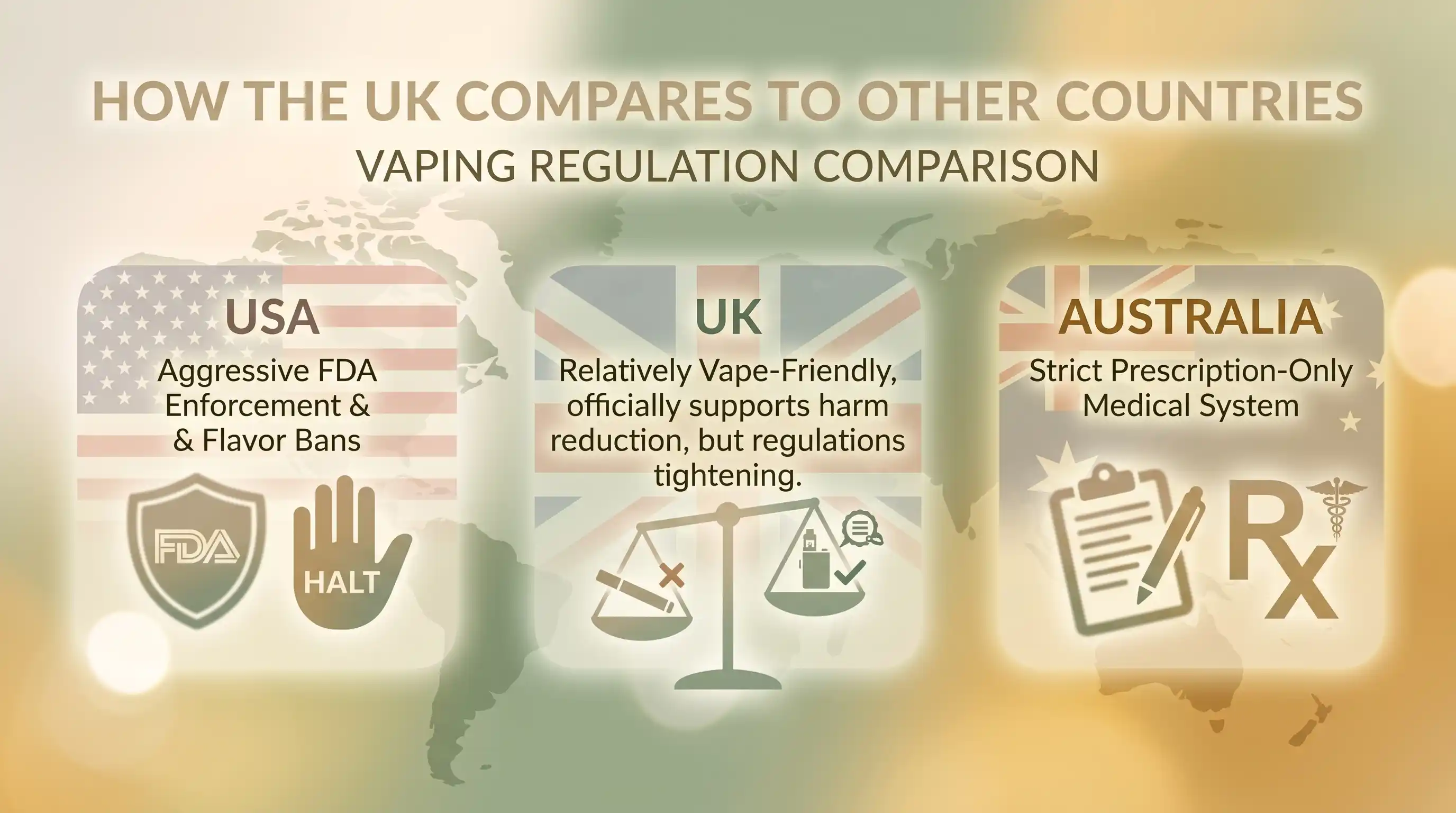
Compared to some international markets, the UK remains relatively vape-friendly.
For instance, Australia has introduced a strict prescription-only system. Meanwhile, the United States continues to deal with aggressive FDA enforcement actions.
The UK still officially supports vaping as a smoking harm reduction tool for adults. However, regulations are clearly becoming stricter.
Final Thoughts
The UK vape industry is clearly moving into a far more regulated future.
Several things are now certain:
- Disposable vapes are disappearing
- Vaping costs will increase
- Compliance enforcement will become stricter
At the same time, many feared changes, such as full-flavour bans, remain unconfirmed proposals rather than active laws.
The direction remains clear. Rechargeable and refillable vaping systems are becoming the future of the UK vape market. This will help you reduce long-term costs and avoid disruption later.
Vaping News will continue to track every major UK vape regulation update. We’ll report on new developments as they appear between now and 2027.