Introduction
Looking for the right device? Browse our detailed vape kit guides on Vaping News.
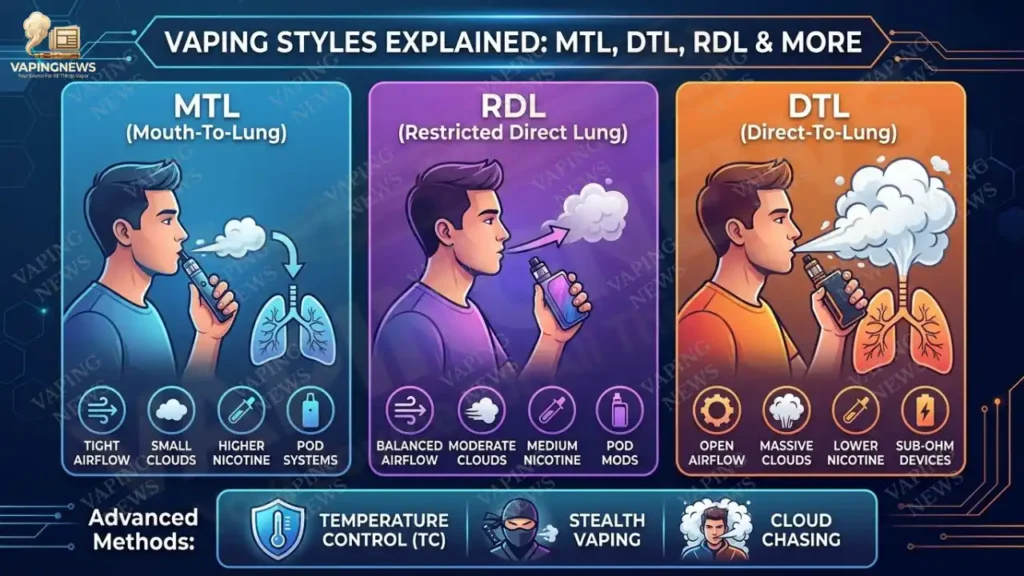
Vaping has evolved far beyond simple cigarette alternatives. Modern vape devices now offer multiple inhaling styles, airflow systems, and coil designs. This creates vaping experiences that feel completely different from one another.
Some adult vapers prefer tight draws that closely resemble smoking a cigarette. They often use compact pod systems or prefilled pod kits to achieve this. Others prefer warmer vapour, stronger flavour, and open airflow that creates dense clouds.
Read the NHS vaping advice page for additional information on vaping and stopping smoking.
For many beginners in the UK, one of the most confusing parts of vaping is understanding the difference between MTL, DTL, and other vaping styles. Choosing the wrong style can make vaping feel uncomfortable, too harsh, too weak, or simply unsatisfying.
This guide explains the major vaping styles used across the UK in simple language.
- How each inhaling method works
- What kind of devices support them
- How nicotine strength changes between styles
- Why airflow, coil resistance, and e-liquid ratios matter
TABLE OF CONTENTS
- Why Different Vaping Styles Matter
- What Is MTL Vaping?
- What Is DTL Vaping?
- What Is RDL Vaping?
- Temperature Control (TC) Vaping
- What Is Stealth Vaping?
- Cloud Chasing Explained
- How to Choose the Right Vaping Style
- How Vaping Styles Have Changed Over Time
- Important Vape Safety Considerations
- Final Thoughts
QUICK OVERVIEW
✓ MTL, RDL, and DTL vaping each deliver a different balance of airflow, vapour production, flavour, and nicotine satisfaction.
✓ MTL is ideal for beginners and ex-smokers, while DTL suits experienced users who prefer larger clouds and lower nicotine strengths.
✓ RDL offers a middle ground, combining stronger flavour with moderate vapour production and a smoother inhale.
✓ Understanding vaping styles, coil resistance, airflow, and nicotine levels helps you choose a device that matches your experience and preferences.
Why Different Vaping Styles Matter
Two people can use the same vape device and still have completely different experiences. The way you inhale changes how the device performs and how the vapour feels.
Different vaping styles affect:
- airflow tightness
- vapour density
- flavour intensity
- throat hit strength
- nicotine delivery
- vapour temperature
- battery usage
- e-liquid consumption
Understanding these differences is key. It helps vapers find a setup that matches their preferences instead of relying on guesswork.
What Is MTL Vaping?
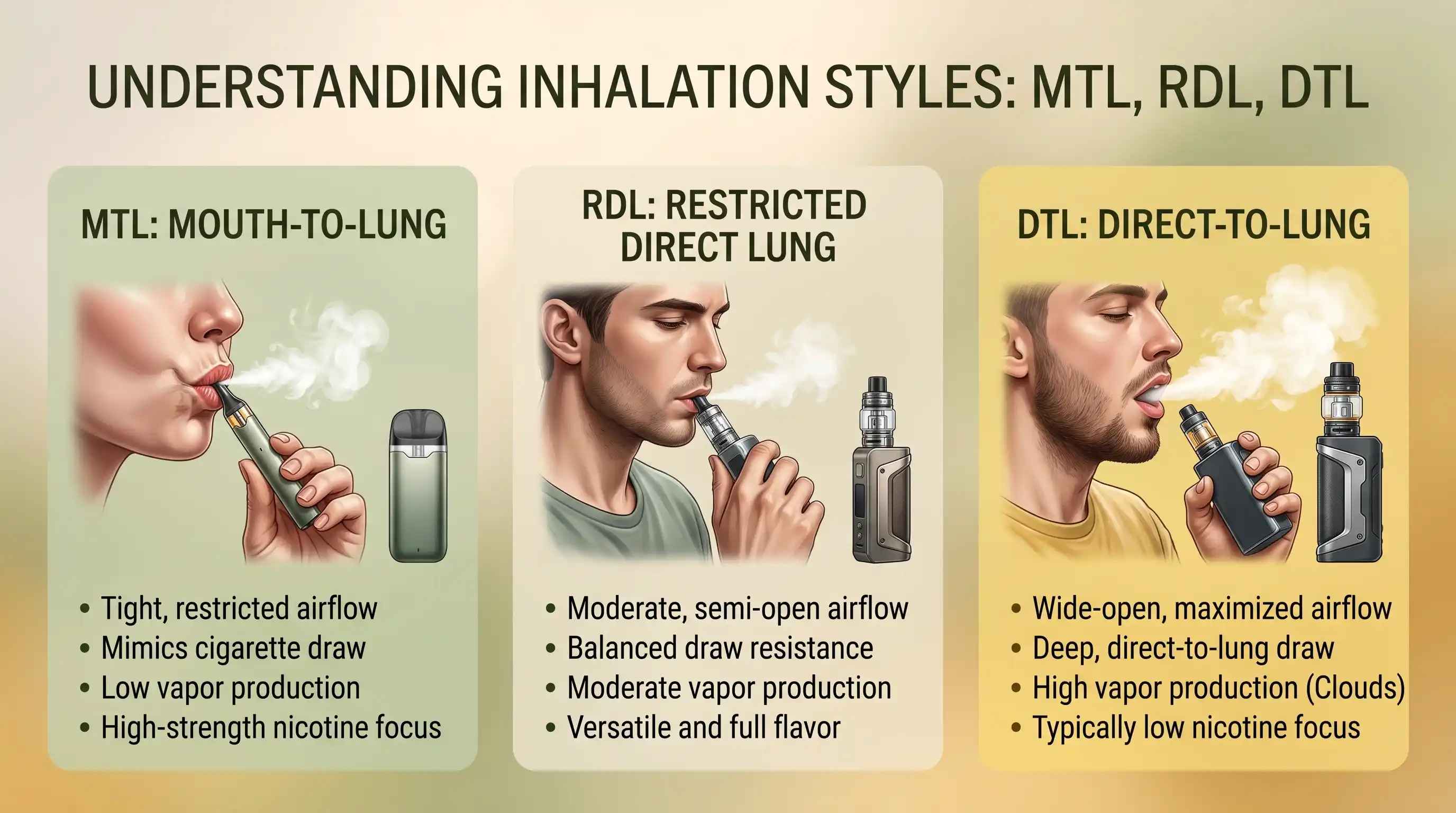
MTL stands for Mouth-To-Lung vaping.
This style closely mimics the inhale pattern of smoking a cigarette. Vapour is first pulled into the mouth and then inhaled into the lungs.
For many ex-smokers, this feels familiar and comfortable.
How MTL Vaping Works
Devices designed for MTL vaping usually use:
- higher resistance coils
- tighter airflow systems
- lower wattage settings
Because the airflow is restricted, the inhale feels controlled and focused rather than wide open.
MTL devices usually produce:
- smaller vapour clouds
- cooler vapour
- stronger throat hits
- slower e-liquid consumption
This style is extremely common among beginner vapers in the UK.
Who Usually Prefers MTL Vaping?
MTL vaping often appeals to:
- adults moving away from smoking
- beginners using refillable pod kits
- people who prefer discreet vapour
- users wanting compact portable devices
- vapers using stronger nicotine strengths
Nicotine Strengths Commonly Used in MTL
MTL vaping produces smaller clouds. Because of this, users often opt for E-Liquids with a higher nicotine concentration.
Common nicotine levels include:
- 6mg
- 10mg
- 18mg
- 20mg nicotine salts
Nicotine salts are especially popular with MTL devices. This is because they provide a smoother throat hit at higher strengths.
Advantages of MTL Vaping
Many adult vapers continue using MTL long-term because of its simplicity and efficiency.
Benefits include:
- lower e-liquid usage
- longer battery life
- discreet vapour production
- familiar cigarette-like inhale
- strong nicotine satisfaction
Potential Drawbacks of MTL
Although MTL works very well for many people, some users eventually want more airflow or a stronger flavour.
Possible downsides include:
- limited cloud production
- cooler vapour
- tighter airflow that some people find restrictive
- less intense flavour compared to open airflow systems
What Is DTL Vaping?
DTL stands for Direct-To-Lung vaping.
Unlike MTL, vapour is inhaled directly into the lungs in one continuous breath.
This creates a very different experience with much larger vapour production and warmer airflow.
How DTL Vaping Works
DTL devices use:
- low-resistance coils
- higher wattage settings
- wide open airflow systems
This combination creates large amounts of warm vapour very quickly.
DTL setups usually produce:
- thick clouds
- intense flavour
- warmer vapour
- smoother airflow
Who Usually Prefers DTL Vaping?
DTL vaping is often preferred by:
- experienced vapers
- cloud chasers
- flavour-focused users
- people who enjoy open airflow
- Users are comfortable with larger devices.
Nicotine Strengths Used in DTL
Because DTL devices produce much larger amounts of vapour per puff, nicotine strengths must stay lower.
Most DTL users vape:
- 0mg
- 3mg
- 6mg nicotine
Using strong nicotine salts in DTL devices often feels overwhelmingly harsh.
Advantages of DTL Vaping
DTL vaping offers several benefits for experienced users.
These include:
- massive vapour production
- very strong flavour
- smooth airflow
- warmer vapour experience
- highly customisable setups
Drawbacks of DTL Vaping
DTL setups also come with trade-offs.
Common downsides include:
- high e-liquid consumption
- shorter battery life
- larger device sizes
- faster coil wear
- less discreet vapour
DTL vaping is generally not ideal for beginners transitioning directly from smoking.
What Is RDL Vaping?
RDL means restricted direct-lung vaping.
This style sits between MTL and DTL.
The airflow is more open than MTL but still more restricted than full DTL vaping.
For many UK vapers, RDL provides a balanced middle ground.
How RDL Vaping Works
RDL devices usually use:
- medium resistance coils
- moderate airflow
- medium wattage levels
This creates:
- moderate vapour production
- balanced warmth
- stronger flavour than MTL
- smoother airflow without huge clouds
Who Prefers RDL Vaping?
RDL often appeals to:
- Disposable vape users are moving toward advanced devices
- MTL users wanting a stronger flavour
- People who dislike very tight draws
- users wanting moderate cloud production
Nicotine Strengths Used in RDL
RDL users commonly vape:
- 3mg
- 5mg
- 10mg nicotine
The ideal strength depends on airflow and personal preference.
Temperature Control Vaping
Temperature Control (TC) vaping is a more advanced style. It’s designed to automatically regulate your coil’s temperature.
Instead of simply controlling wattage, TC devices monitor coil temperature directly.
How Temperature Control Works
Temperature Control devices require:
- compatible chipsets
- specific coil materials such as stainless steel or nickel
The device automatically adjusts power to stop the coil from overheating.
This helps prevent:
- burnt hits
- dry cotton burns
- inconsistent flavour
Who Uses Temperature Control?
TC vaping is usually preferred by:
- experienced users
- flavour-focused vapers
- people wanting stable performance
Advantages of Temperature Control
Benefits include:
- consistent flavour
- reduced risk of burnt hits
- potentially longer coil life
- smoother vapour performance
Drawbacks of Temperature Control
However, TC vaping can feel more complicated for beginners.
It requires:
- compatible devices
- learning device settings
- Understanding Coil Materials
What Is Stealth Vaping?
Stealth vaping focuses on reducing visible vapour and limiting noticeable airflow noise.
This style prioritises subtle vaping sessions.
How Stealth Vaping Works
Stealth vaping often uses:
- compact pod devices
- tight airflow
- low wattage settings
- short inhales
This reduces cloud production significantly.
Why Some People Prefer Stealth Vaping
Stealth vaping may appeal to:
- adults wanting privacy
- users in shared environments
- people preferring discreet devices
Limitations of Stealth Vaping
Because vapour output stays low, stealth vaping often reduces:
flavour intensity
throat hit strength
airflow openness
Cloud Chasing Explained
Cloud chasing is a style of vaping. It’s focused on producing the largest possible vapour clouds. This is a hobby-focused approach.
This style is popular among advanced enthusiasts and vaping hobbyists.
How Cloud Chasing Works
Cloud chasing usually requires:
- high-powered mods
- extremely low resistance coils
- Open Airflow systems
- high VG e-liquids
Who Enjoys Cloud Chasing?
This style usually attracts:
- advanced users
- coil builders
- hobbyist vapers
- performance-focused enthusiasts
Downsides of Cloud Chasing
Cloud chasing consumes large amounts of:
- battery power
- e-liquid
- coil lifespan
It also requires a strong understanding of battery safety and device mechanics.
How to Choose the Right Vaping Style
The right vaping style depends on several personal factors.
Important considerations include:
- nicotine preference
- airflow comfort
- flavour intensity
- cloud production
- portability needs
- vaping experience level
- daily habits
Many adult vapers begin with MTL because it feels closest to smoking.
Over time, some move toward RDL or DTL once they become more comfortable with vaping devices and lower nicotine strengths. Others stay with MTL permanently. They prefer tighter airflow and discreet vapour production.
How Vaping Styles Have Changed Over Time
The earliest vape devices were designed to replace cigarettes. As a result, they were almost entirely built for MTL vaping.
As vaping technology evolved, newer developments were introduced:
- adjustable airflow systems
- variable wattage
- mesh coils
- pod mods
- smart chipsets
These innovations created multiple vaping styles that now suit very different preferences.
Modern vapers can now choose between:
- tight cigarette-like inhales
- balanced medium airflow setups
- wide-open cloud-producing devices
Important Vape Safety Considerations
No matter which vaping style someone prefers, basic safety practices remain extremely important.
Recommended safety habits include:
- using regulated devices
- following the manufacturer’s instructions
- replacing coils regularly
- keeping devices clean
- storing batteries safely
- keeping e-liquids away from children and pets
Final Thoughts
Vaping is not a single fixed experience. Different vaping styles create completely different sensations. This depends on factors like airflow, vapour warmth, nicotine strength, and inhaling technique.
MTL vaping offers tighter, cigarette-like draws and discreet vapour.
RDL vaping provides a balanced middle ground with stronger flavour and moderate clouds.
DTL vaping focuses on warm vapour and dense cloud production.
More advanced styles offer additional levels of customisation for experienced users. These include Temperature Control and cloud chasing.
Understanding these vaping styles helps adult vapers make better decisions. They can choose a setup that matches their personal comfort level and preferences.
For more safety tips and device guides, explore our latest articles on Vaping News.
Related Reading: The Guardian examines why vaping is considered less harmful than smoking and why quitting nicotine can still be challenging.