From Vaping News | Your Complete UK Vaping Guide
Beginner’s Guide
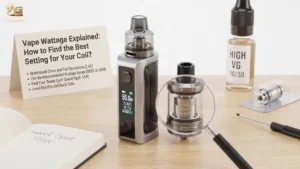
If you have ever stared at the wattage controls on your device and genuinely not known where to start, you are in good company. Wattage is one of the most talked about and least understood aspects of vaping. Ask ten vapers what wattage they use, and you will get ten different answers, often with no explanation of why. Most online guides do not help much either. They either hand you a basic ohm-to-watt chart and leave you to figure out the rest, or they bury the practical advice under layers of electrical theory that most people have no interest in.
This guide from Vaping News takes a different approach. It explains what wattage actually does to your vaping experience, why the ohm reading on your coil is only part of the story, and how to find the setting that genuinely works for your specific device and coil through a simple and repeatable process. By the end of this guide, you will understand not just what wattage to use but why, which is the knowledge that actually sticks.
TABLE OF CONTENTS
- Quick Answer: What Wattage Should I Vape At?
- What Is Vape Wattage and Why Does It Matter?
- How Coil Resistance Affects Your Wattage Setting
- The Most Important Rule Most Wattage Guides Get Wrong
- Vape Wattage Chart by Coil Resistance: A Starting Reference
- How to Find the Best Wattage for Your Coil: Step by Step
- What Happens If Your Wattage Is Too Low or Too High?
- Wattage by Vaping Style: MTL, RDL and DTL
- How Wattage and Airflow Work Together
- Frequently Asked Questions
- Final Verdict
QUICK OVERVIEW
✓ The right vape wattage depends on your specific coil, not just its resistance.
✓ Higher wattage generally produces warmer vapour and more vapour production, while lower wattage gives a cooler, lighter vape.
✓ Always check the manufacturer’s recommended wattage range printed on your coil before adjusting your device.
✓ Start at the lower end of the recommended range and increase gradually until you find your preferred balance of flavour, warmth and vapour.
✓ MTL devices typically use lower wattages, while RDL and DTL setups generally require more power and are often paired with higher-VG e-liquids.
Quick Answer: What Wattage Should I Vape At?
Higher wattage usually means more heat, warmer vapour, and more vapour production. It can also make the flavour feel stronger. Lower wattage keeps the coil cooler and produces lighter vapour. The right balance can make your vaping experience more comfortable and enjoyable.
What Is Vape Wattage and Why Does It Matter?
Wattage is the amount of electrical power delivered to your coil. When you fire your device, the battery sends power to the coil. The coil heats up and turns the e-liquid into vapour. The wattage setting controls how much power reaches the coil.
Higher wattage usually means more heat, warmer vapour, and more vapour production. It can also make the flavour feel stronger. Lower wattage keeps the coil cooler and produces lighter vapour. The right balance can make your vaping experience more comfortable and enjoyable.
How Coil Resistance Affects Your Wattage Setting
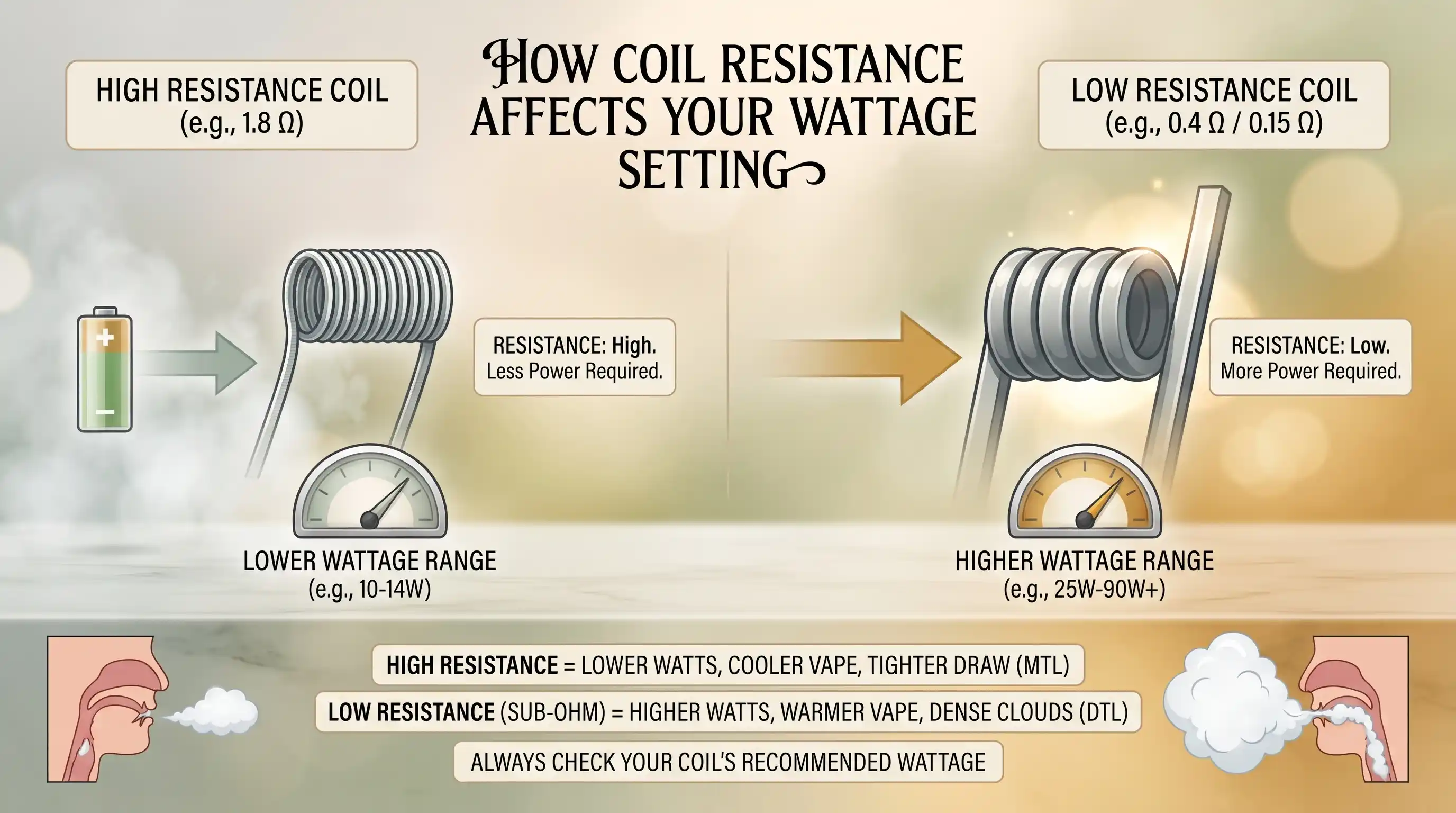
Resistance, measured in ohms, tells you how much the coil resists electrical current. A higher resistance coil requires less power to reach the right temperature. A lower resistance coil requires more. This is why high-resistance coils usually work at lower wattages. Low-resistance sub-ohm coils need more power to work effectively.
Sub-ohm coils below 1.0 ohm are often used for direct-to-lung (DTL) vaping and usually need more power. For example, a 0.4 ohm coil may use around 25 watts, while a 0.15 ohm coil may need 90 watts or more. Always follow the wattage range shown on your specific coil. These produce larger vapour clouds, more warmth, and more intense flavour.
The Most Important Rule Most Wattage Guides Get Wrong
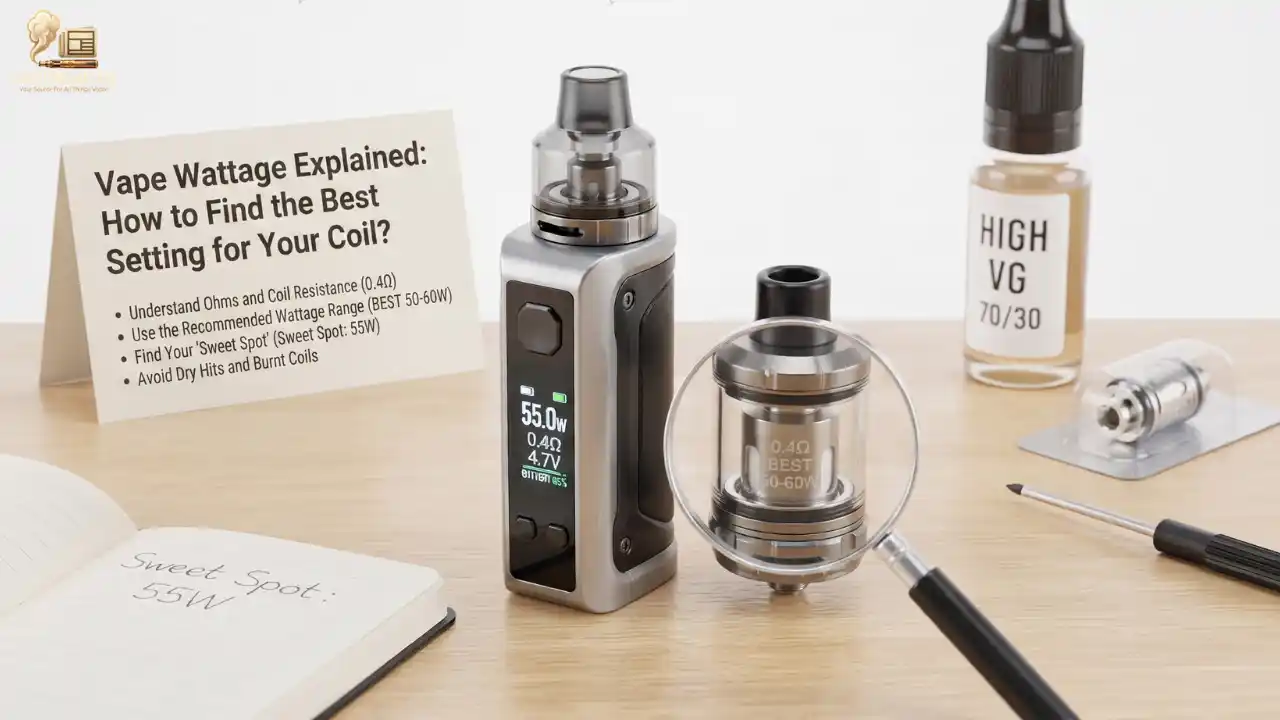
This is the key point that simple wattage charts often miss. The right wattage depends on the specific coil, not just its resistance. Always check the wattage range recommended for your coil.
The same resistance does not mean the same wattage.
Two coils can both measure 0.4 ohms and have completely different recommended wattage ranges. One might be designed to operate at 24 to 30 watts while another, also 0.4 ohms, might need 60 to 70 watts to perform correctly. Using the first coil’s wattage on the second produces weak, unsatisfying vapour. Using the second coil’s wattage on the first burns it out almost immediately.
Surface area can all change the recommended wattage. This is why two coils with the same resistance can have very different wattage ranges.
| Coil | Resistance | Wire | Recommended Wattage | Vaping Style | E-Liquid |
|---|---|---|---|---|---|
| Coil A | 0.4 ohms | Kanthal | 24–30W | Warm MTL | 50/50 |
| Coil B | 0.4 ohms | Mesh | 60–70W | Full DTL | High VG |
Always check the wattage range printed on your coil before vaping. A resistance chart can give you a general guide, but the manufacturer’s recommendation should come first.
Vape Wattage Chart by Coil Resistance: A Starting Reference
Use this table as a general starting point only. Always verify the recommended range on your specific coil before vaping.
| Resistance | General Wattage Example | Typical Use |
|---|---|---|
| 1.2 ohms | 8 to 15 watts | MTL, tight draw, nicotine salts |
| 1.0 ohms | 10 to 16 watts | MTL, smooth draw |
| 0.8 ohms | 12 to 20 watts | MTL to RDL |
| 0.6 ohms | 18 to 25 watts | RDL |
| 0.4 ohms | 25 to 40 watts | RDL to DTL |
| 0.3 ohms | 30 to 45 watts | DTL |
| 0.2 ohms | 45 to 70 watts | DTL, cloud focused |
| 0.15 ohms | 60 to 90 watts | DTL, advanced |
How to Find the Best Wattage for Your Coil: Step by Step
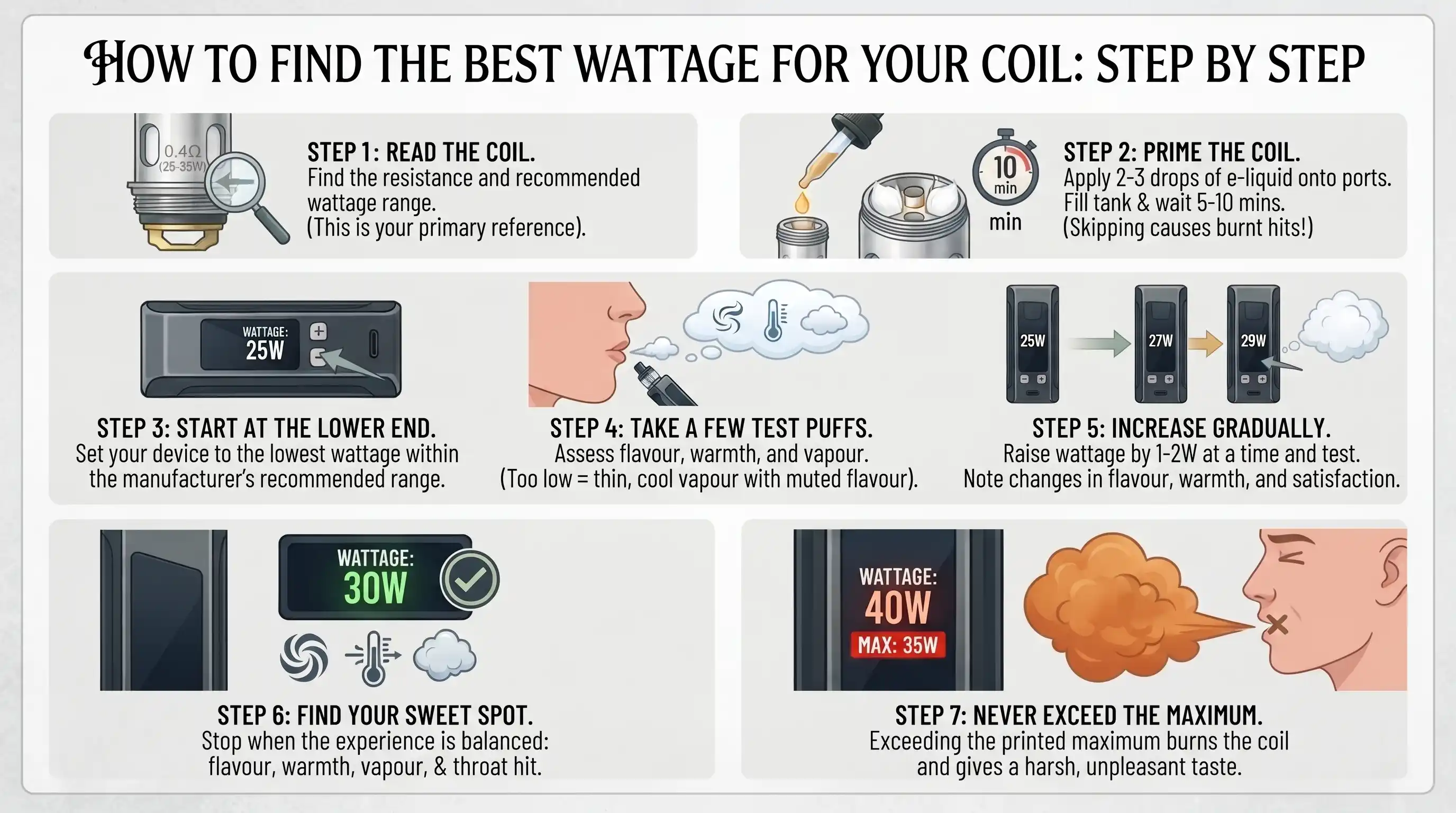
Step 1: Read the coil. Find the resistance and recommended wattage range printed on the coil or its packaging. This is always your primary reference.
Step 2: Prime the coil. Apply two to three drops of e-liquid onto the visible coil ports. Fill the tank or pod and wait at least five to ten minutes before vaping. Skipping this step on a dry wick causes a burnt hit that can permanently damage a new coil in the first few puffs.
Step 3: Start at the lower end. Set your device to the lowest wattage within the manufacturer’s recommended range.
Step 4: Take a few test puffs. Two to three puffs at the starting wattage are enough to assess the flavour, warmth, and vapour. At too low a wattage, the vapour will feel thin and cool with muted flavour.
Step 5: Increase gradually. Raise the wattage by one to two watts at a time and take a few puffs after each adjustment. Note the changes in flavour intensity, vapour warmth, and draw satisfaction.
Step 6: Find your sweet spot. Stop increasing when the experience feels right. Your sweet spot sits where flavour, warmth, vapour volume, and throat hit all feel balanced for your personal preference.
Step 7: Never exceed the maximum. Exceeding the printed maximum wattage burns the coil and produces a harsh,h unpleasant taste. Stay within the recommended range.
What Happens If Your Wattage Is Too Low or Too High?
Too low: The vapour feels cool and thin, almost like inhaling lightly flavoured air. Flavour is flat, and the draw lacks satisfaction. The fix is to increase wattage gradually within the recommended range.
Too high: A burnt or acrid taste appears suddenly. Vapour feels excessively hot or harsh. Dry hits occur when the coil produces more heat than the wick can supply with liquid quickly enough. Reduce wattage immediately. If the burnt taste persists,s the coil may be damaged and should be replaced.
Wattage by Vaping Style: MTL, RDL and DTL
| Vaping Style | Typical Resistance | Typical Wattage | Draw | Best E-Liquid |
|---|---|---|---|---|
| MTL | 0.8 to 1.2 ohms | 8 to 20 watts | Tight | 50/50 or high PG nic salt |
| RDL | 0.5 to 0.8 ohms | 20 to 35 watts | Medium | 50/50 or 70/30 VG |
| DTL | 0.15 to 0.4 ohms | 40 to 90+ watts | Open | High VG 70/30 or above |
MTL vaping replicates the draw of a cigarette and is ideal for beginners and ex-smokers. It uses high-resistance coils at low wattages with nicotine salt or 50/50 e-liquids. RDL sits between MTL and DTL, offering more vapour than MTL without the full intensity of a high-power direct-to-lung setup. DTL vaping produces the largest clouds and most intense flavour at high wattages using sub-ohm coils and high VG e-liquid.
How Wattage and Airflow Work Together
The process is simple and works with most coils and devices. First, check the wattage range recommended by the manufacturer. Start at the lower end and slowly increase the power. Stop when you find the setting that gives you the best flavour and vapour.
Opening the airflow draws more cool air across the coil, which cools the vapour at the same wattage setting. Closing the airflow concentrates the heat and produces warmer, more flavour-intense vapour. If your vapour feels slightly too warm, try opening the airflow before increasing wattage. If it feels too cool, close the airflow slightly before reducing wattage. Small airflow adjustments often achieve what would otherwise need a wattage change.
Frequently Asked Questions
What wattage should I vape at?
Always start with the manufacturer’s recommended wattage range printed on your coil. Begin at the lower end and increase gradually until the experience feels balanced and satisfying.
Why does my vape taste burnt even at the recommended wattage?
The most likely cause is an unprimed or insufficiently primed coil. If the wick was not fully saturated before the first puff, the cotton may have scorched. Other causes include an e-liquid level that has run too low or a coil that is near the end of its usable life.
Does higher wattage always mean better flavour?
The process is simple and works with most coils and devices. First, check the wattage range recommended by the manufacturer. Start at the lower end and slowly increase the power. Stop when you find the setting that gives you the best flavour and vapour.
What is the best wattage for a 0.4 ohm coil?
This depends entirely on the specific coil. A 0.4 ohm coil might have a recommended range of 24 to 30 watts or 60 to 70 watts depending on its construction. Always check the printed recommendation rather than relying on the resistance figure alone.
How do I know if my wattage is too high or too low?
Too low produces cool, thin, weak vapour with muted flavour. Too high produces hot or harsh vapour, a burnt taste, and dry hits. The right setting sits where none of these signs is present, and the experience feels balanced.
Final Verdict
The process is simple and works with most coils and devices. First, check the wattage range recommended by the manufacturer. Start at the lower end and slowly increase the power. Stop when you find the setting that gives you the best flavour and vapour.
Remember that coil resistance is not the only factor. The coil design also affects the recommended wattage. A wattage chart can give you a general guide, but the range printed on the coil should always be your first choice.
Vaping News covers vaping guides, regulation updates, and product advice for UK vapers.