Overview
For years, the vaping conversation in the UK focused almost entirely on smoking cessation. Public health was the top priority. But as vaping became more mainstream, another major issue started attracting attention.
That issue is its environmental impact.
Today, millions of adults in the UK vape. They use a wide range of devices, from rechargeable pod systems and refillable kits to disposables. Vaping is no longer judged solely on nicotine delivery or flavour quality.
The vaping industry is no longer judged only on nicotine delivery or flavour quality.
At Vaping News, we have seen environmental discussions become one of the fastest-growing topics in the UK vape industry. In 2026, these concerns have reached a fever pitch.
The disposable vape ban accelerated this conversation dramatically.
This article explores:
- The real environmental impact of vaping in the UK
- The biggest waste problems facing the industry
- How regulations are changing
- What the future of sustainable vaping may actually look like
Get more information from: Wikipedia
Why Environmental Concerns Around Vaping Increased
The environmental impact of vaping goes far beyond simply using a vape device.
Every vaping product has a full lifecycle that includes:
- raw material extraction
- manufacturing
- packaging
- transportation
- battery usage
- final disposal
As vaping continued to grow across the UK, concerns increased around how much waste the industry was creating.
Disposable vapes especially became a major flashpoint. Millions of devices containing batteries and plastic were being discarded every week.
How Vape Device Manufacturing Impacts the Environment
Modern vape devices rely on several materials that carry environmental costs during production.
Key materials include:
- lithium
- cobalt
- plastics
- electronic components
- metal alloys
Lithium and cobalt mining, especially for batteries, can contribute to:
- habitat destruction
- pollution
- water contamination
- high energy consumption
Plastic casings also rely heavily on fossil fuel production. Electronic circuits need energy-intensive manufacturing processes.
The manufacturing process alone means that vape products carry an environmental footprint. This is even before they reach consumers.
The Environmental Impact of E-Liquids
E-liquids themselves also have environmental consequences.
Most vape juice contains:
- vegetable glycerine (VG)
- propylene glycol (PG)
- nicotine
- flavouring compounds
Each ingredient involves its own production process.
Vegetable Glycerine and Propylene Glycol
VG often comes from agricultural production, while PG usually relies on petrochemical processing.
Both processes need:
- water
- land
- energy
- industrial resources
- Large-scale crop production linked to VG can also contribute to deforestation.
- It also leads to significant water consumption if poorly managed.
Nicotine Production
Nicotine itself is extracted from tobacco plants.
Tobacco farming has historically been linked to:
- soil degradation
- chemical fertiliser use
- pesticide pollution
- land clearing
Flavouring Production
Many vape flavourings are synthetically manufactured.
- This happens through chemical processing systems.
- These can produce industrial waste if not carefully regulated.
Why Disposable Vapes Became a Major Environmental Problem
Disposable vapes pushed environmental concerns into the mainstream public discussion. This happened much faster than it ever did for refillable systems.
The problem came down to scale.
Millions of disposable devices were being discarded every single week in the UK before the ban.
Each device contained:
- a lithium battery
- plastic housing
- metal components
- unrecycled electronics
Most users simply threw disposables into general waste bins.
The mix of electronics, batteries, and plastic in these products made them difficult and expensive to recycle properly.
The Disposable Vape Ban Changed the Industry
The UK disposable vape ban became a major turning point for environmental discussions.
Once disposables disappeared, users increasingly moved toward:
- rechargeable pod systems
- refillable pod kits
- reusable vape devices
This immediately reduced the number of batteries and full devices being discarded constantly.
Rechargeable systems still create waste through:
- pods
- bottles
- coils
But the environmental impact is dramatically lower. This is especially true when compared to throwing away complete disposable devices every few days.
How the UK Vape Industry Is Responding
The industry has started introducing several changes aimed at improving sustainability.
Some of the biggest developments include:
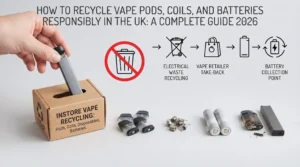
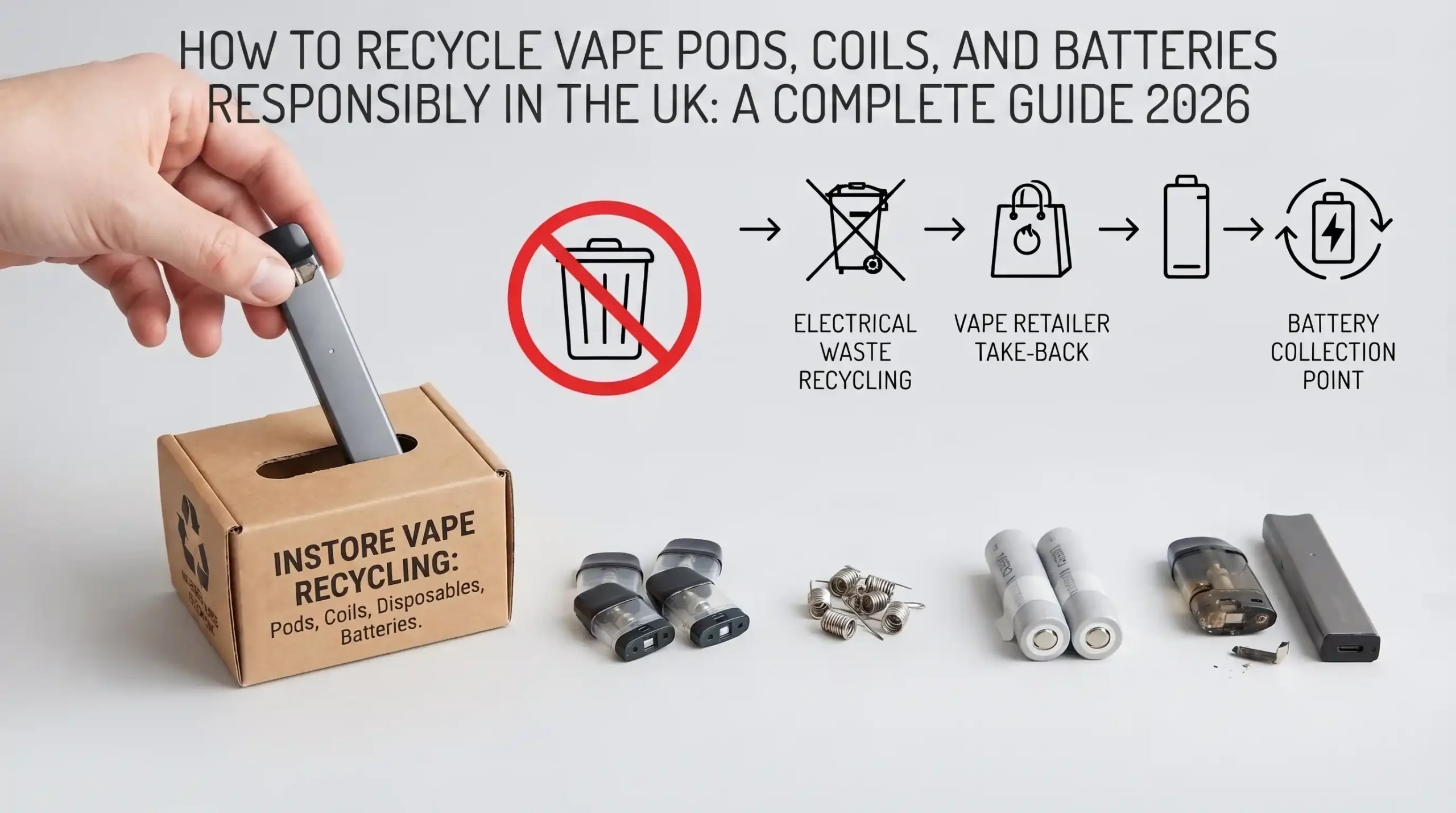
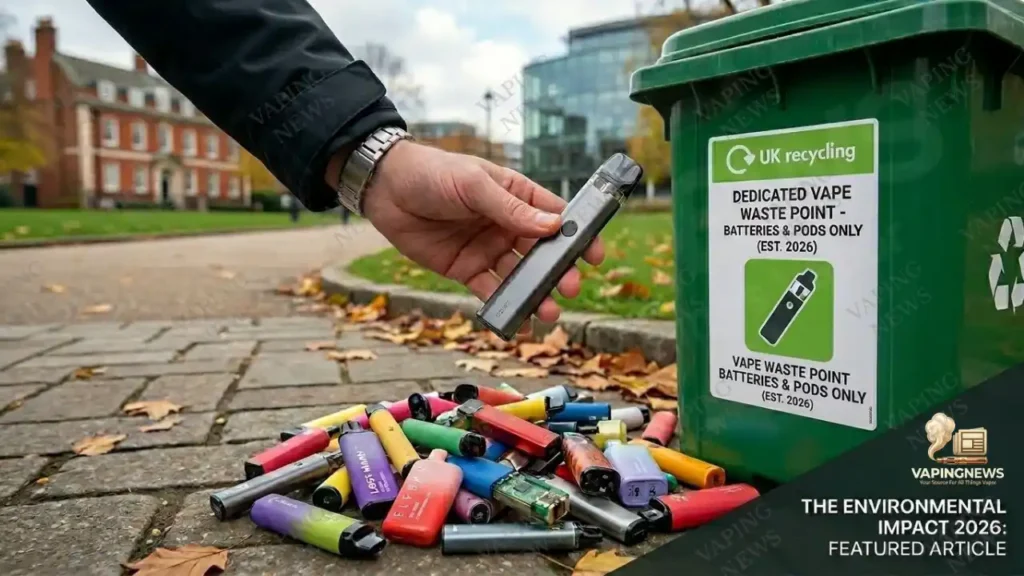
- dedicated vape recycling bins
- partnerships with electronic waste companies
- easier-to-disassemble devices
- longer-lasting rechargeable batteries
- reduced packaging waste
Manufacturers are also investing more heavily in mesh coil technology and improved pod longevity. This means users replace components less often.
How Rechargeable Pod Systems Improved Sustainability
Rechargeable pod systems quickly became one of the most environmentally practical alternatives. This was especially true after disposables disappeared.
Instead of constantly discarding an entire device, users now keep the same battery unit for months. They only need to replace smaller components.
This dramatically reduces:
- battery waste
- electronic waste
- plastic consumption
Rechargeable pod batteries can survive hundreds of charging cycles. Replacement only becomes necessary after extended use.
How Vaping Compares Environmentally to Smoking
Traditional cigarettes also carry enormous environmental damage.
Smoking contributes heavily to:
- deforestation
- cigarette litter
- toxic filter waste
- chemical pollution
Cigarette filters remain one of the most common forms of litter globally.
Vaping is not without its environmental impact. However, it presents a greater opportunity for sustainability improvements. These include:
- recycling systems
- reusable hardware
- rechargeable batteries
- product redesign
The Role Consumers Play in Sustainability
Consumers also influence how sustainable vaping becomes in the future.
Several habits make a significant difference.
Choosing Rechargeable Devices
Using refillable or rechargeable systems dramatically reduces waste compared to disposables.
Recycling Batteries Correctly
Lithium batteries should never go into standard household waste bins.
Supporting Sustainable Brands
More users are now paying attention to:
- recyclable packaging
- reusable systems
- environmentally responsible manufacturing
How UK Regulations Are Changing the Industry
Environmental regulation is now becoming a major force shaping the future of vaping in the UK.
Regulators are increasingly pushing for:
- Stronger recycling compliance
- Responsible disposal systems
- Reduced single-use products
- Improved sustainability standards
The message from UK authorities is becoming very clear:
Environmental responsibility is no longer optional for vape companies.
The Future of Sustainable Vaping
The vaping industry is now entering a period where sustainability matters almost as much as performance and flavour.
Several trends are likely to continue growing:
- rechargeable pod systems
- longer-lasting devices
- reduced packaging waste
- recycling initiatives
- reusable hardware designs
The disposable vape ban accelerated that awareness dramatically.
Frequently Asked Questions
Are disposable vapes bad for the environment?
Disposable vapes create significant environmental waste. Each device contains plastic, lithium batteries, and electronic components. They are often thrown away after a single use.
Is vaping bad for the environment?
While vaping might produce less litter than traditional cigarettes, the growing amount of vape waste is a serious concern. Batteries, pods, and packaging have all raised environmental alarms in the UK.
How does vaping affect the environment?
Vaping affects the environment in several ways. These include battery disposal, plastic waste, and manufacturing emissions. The proper recycling of electronic vape devices also presents a growing challenge.
Signs that vaping is affecting your lungs
Common signs that vaping may be affecting your lungs include:
- Coughing
- Throat irritation
- Chest tightness
- Shortness of breath
- Increased mucus production
Does vaping in the house affect others?
Vaping indoors can expose others to secondhand aerosol, especially in poorly ventilated spaces. However, the exposure levels are generally lower than those of traditional cigarette smoke.
How does vaping affect the lungs?
Vaping can irritate the lungs and airways, particularly for new users or those who vape heavily. Some people may experience coughing, dryness, or throat irritation. Breathing discomfort can also occur, depending on nicotine strength and vaping habits.
Final Thoughts
The environmental impact of vaping is complex.
From a public health perspective, vaping is still widely considered a lower-risk alternative to smoking. However, that does not automatically make it environmentally harmless.
The industry still faces major challenges around:
- battery disposal
- plastic waste
- recycling systems
- manufacturing sustainability
However, the industry is already moving away from disposable devices. As the UK vaping market continues evolving, sustainability is no longer just a side discussion. It is becoming one of the defining issues shaping the future of the entire industry.
At Vaping News, one thing has become increasingly obvious during 2026. Most UK vapers are now far more aware of environmental impact than they were only a few years ago.