Key Information
A counterfeit vape is an unregulated device illegally manufactured to imitate a genuine brand. You can identify a fake vape in the UK by inspecting its packaging and verifying the QR code. You should also cross-reference the product with the MHRA database and examine the physical device. The most reliable protection is buying from verified UK retailers with a traceable supply chain. Counterfeit vapes carry serious health and safety risks. These can include unregulated ingredients, incorrect nicotine concentrations, heavy metal contamination, and battery failure.
At Vaping News, we explain how to check whether the vape you are buying is genuine or fake.
Table of Contents
- Why Counterfeit Vapes Are So Common in the UK
- The Three-Layer Authenticity Test
- Brand-Specific Warning Signs
- Why Counterfeit Vapes Are Dangerous
- I Used a Fake Vape: What to Do Next
- How to Avoid Fake Vapes: Buying Safely from UK Retailers
- Counterfeit Vape Inspection Checklist
- Counterfeit Vapes UK: Frequently Asked Questions
- Final Thought
Why Counterfeit Vapes Are So Common in the UK
Counterfeit vape manufacturing is financially driven. The UK vaping market is worth billions of pounds annually. Popular devices with high brand recognition are the most profitable targets. Legal UK vape products must comply with TPD regulations, pay import duties and undergo MHRA notification. All add cost. Counterfeit manufacturers avoid these costs. This allows them to produce imitation products at a fraction of the retail price and sell them at near-retail margins.
Grey market imports form a second category of risk alongside outright counterfeits. These are products manufactured overseas to different regulatory standards than UK TPD requirements.
They may look genuine, but have not gone through the MHRA notification process required for legal UK sale.
| Feature | Genuine Vape | Counterfeit Vape |
|---|---|---|
| Packaging | High-quality printing with clear labels | Blurry print, spelling mistakes, poor finish |
| QR/Scratch Code | Verifies successfully on the official website | Missing, invalid, or fake verification code |
| Build Quality | Durable materials with a premium feel | Cheap plastic, loose parts, poor assembly |
| Flavour | Consistent and authentic taste | Harsh, burnt, or unusual flavour |
| Battery Performance | Stable and reliable | Short battery life or overheating |
| Safety Compliance | Meets UK TPD regulations | Often non-compliant or untested |
| Price | Sold at standard market prices | Significantly cheaper than normal |
The Three-Layer Authenticity Test
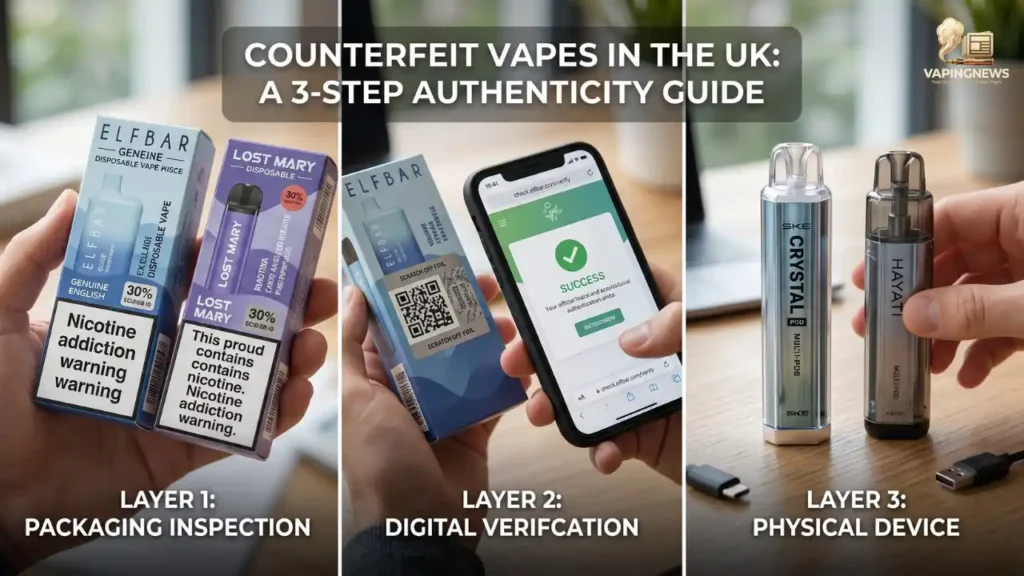
Rather than a generic checklist, authentic vape verification works best as three distinct layers. Passing all three gives confidence. Failing any single layer is an enough reason not to use the product.
Layer one is a packaging audit, visual and tactile inspection of the box before any digital verification. This catches the crudest fakes immediately.
Layer two is digital verification. This involves using QR codes, scratch codes and serial numbers. The second step is using the MHRA database to verify the product through official channels. This process catches sophisticated packaging fakes that pass visual inspection.
Layer three is physical device inspection, a hands-on assessment of the device itself. This step is designed to catch counterfeits with perfectly cloned packaging. It also catches fakes with cloned digital verification methods.
Layer One: Vape Packaging Inspection
Print quality on genuine TPD-compliant products is produced with high-quality commercial printing. It may also have a slight graininess to logos and photographs that is visible in good light. Hold the box at an angle to catch low-quality print that is not obvious head-on.
Spelling and text:
- Counterfeit packaging often has spelling mistakes.
- You might also find grammatical errors.
- Look out for slight misspellings of the brand name.
Mandatory packaging requirements:
- All legal UK vape products that contain nicotine must display a warning.
- This warning should state that nicotine is an addictive substance.
MHRA notification number: Legal UK vape products must be registered with the MHRA. They will have an ECID or GB ID number on the packaging or in a leaflet. A product with no traceable registration number is not legally compliant.
Safety leaflet: All genuine UK vape products include a safety information leaflet. This is printed and can be found inside the packaging. The absence of this leaflet is a clear red flag. A missing leaflet is a warning sign. A poorly printed or unnaturally translated leaflet is a secondary warning.
Seal integrity: Check that tamper-evident seals are intact and that opening the box does not reveal signs of resealing. Some counterfeit products are repackaged in genuine boxes to pass initial inspection.
Layer Two: Digital Verification Explained
QR code verification is where most guides stop without explaining what you are actually looking for. Scanning the QR code should direct you to the brand’s official website. Or, it might lead to a dedicated authentication page.
A failed or suspicious scan looks different.
- It could lead to a generic website or a broken link.
- The page might lack a specific product reference.
- The domain might not match the brand’s official web address.
Many brands use scratch-and-verify codes as an extra layer of authentication. A foil panel on the packaging conceals a code that is scratched to reveal it and entered on the brand’s verification page. If the foil has been scratched on a sealed product, the code may have been copied. This is a clear sign that you have a counterfeit product. This is a clear sign of counterfeit packaging.
MHRA database verification is the most authoritative check available. The Medicines and Healthcare products Regulatory Agency (MHRA) maintains a publicly accessible database. This contains all notified vape products in the UK. Find the ECID or GB ID on the product’s packaging. Then, search for it in the MHRA product notifications database. A product that does not appear is either not registered or a counterfeit.
Cloned verification systems represent the most sophisticated counterfeit approach. The key is domain accuracy.
Layer Three: Physical Device Inspection
Weight and build quality
Genuine devices from established brands are manufactured to consistent specifications. The device may also creak and flex under normal handling. A loosely fitted pod or mouthpiece is another indicator of a counterfeit product.
Charging behaviour
A genuine device should warm slightly during charging but never become uncomfortably hot. A counterfeit device that becomes very hot during charging should not be used again.
The device may also discharge unusually quickly.
Flavour quality
Genuine mesh coil devices deliver consistent flavour from the first draw. A harsh, chemical, or artificial flavour is a major red flag.
The taste may also be noticeably different from what you’d expect from the flavour profile listed on the packaging.
Vapour production
Genuine devices produce consistent vapour output. Counterfeit devices often produce weak and thin vapour. The vapour output may also be inconsistent, which doesn’t align with the product’s expected performance.
Brand-Specific Warning Signs
Fake Elf Bar detection: Elf Bar is one of the most counterfeited brands in the UK. Real Elf Bars come with a scratch-and-verify code. This should redirect you to the official Elf Bar authentication portal. Check that the URL is the genuine domain. Packaging print quality should be sharp and colour-consistent. A device that feels significantly lighter than expected warrants immediate scrutiny.
Fake Lost Mary identification: Like Elf Bars, Lost Mary devices are verified through a QR code system. This QR code will redirect you to an official authentication page. The verification page domain should be the genuine Lost Mary brand URL.
The packaging finish should also match the high-quality standard of genuine products.
Fake Hayati vape check: Hayati is an increasingly targeted brand following its growth in the UK market. To identify a fake Hayati vape, check for the correct ECID or GB ID numbers and verify the QR code destination. For multi-pod systems, inspect the dual-pod mechanism; counterfeit versions often have loose or inconsistent pod fittings.
Fake SKE Crystal warning signs: the SKE Crystal range has been widely imitated. – Pay close attention to the print quality of both the brand name and the crystal-style visuals.
- These elements are often poorly reproduced on counterfeit versions.
Fake IVG detection: IVG multi-pod devices are verified through QR codes on packaging. Check that device weight and build match the genuine product and that pod engagement is secure and consistent.
Why Counterfeit Vapes Are Dangerous
Unregulated ingredients: counterfeit e-liquids are not tested to TPD standards. They may contain ingredients that are prohibited in legally compliant products. Diacetyl and vitamin E acetate are among the compounds associated with respiratory harm. These have been found in unregulated vape products.
This contamination is due to the lower-quality materials used in the coil and tank. These materials are common in unregulated manufacturing.
Incorrect nicotine concentrations: UK TPD law caps nicotine at 20mg per ml. Counterfeit products have been found to contain concentrations significantly above this limit. This creates an overdose risk, particularly for new vapers.
| Risk | Why It Matters |
|---|---|
| Unknown Ingredients | May contain harmful or untested substances. |
| Battery Failure | Poor-quality batteries can overheat or catch fire. |
| Nicotine Inaccuracy | Nicotine levels may be higher or lower than stated. |
| Poor Manufacturing | Low-quality materials increase the risk of leaks and device failure. |
| No Quality Testing | Many counterfeit products bypass UK safety standards. |
I Used a Fake Vape: What to Do Next
Stop using the device immediately. If you have reason to believe a device is counterfeit, do not continue vaping while verification is pending.
Watch for symptoms. If you have been using a suspected counterfeit device, be aware of any unusual symptoms. These include throat or chest irritation, nausea, or dizziness. If symptoms are about, contact your GP or NHS 111.
Contact Trading Standards. Providing the product, packaging and buy details assists enforcement.
Report to the MHRA through its Yellow Card scheme. Consumer reports contribute to ongoing market surveillance.
Seek a refund from the retailer. Citizens Advice can guide you on your consumer rights in your specific situation.
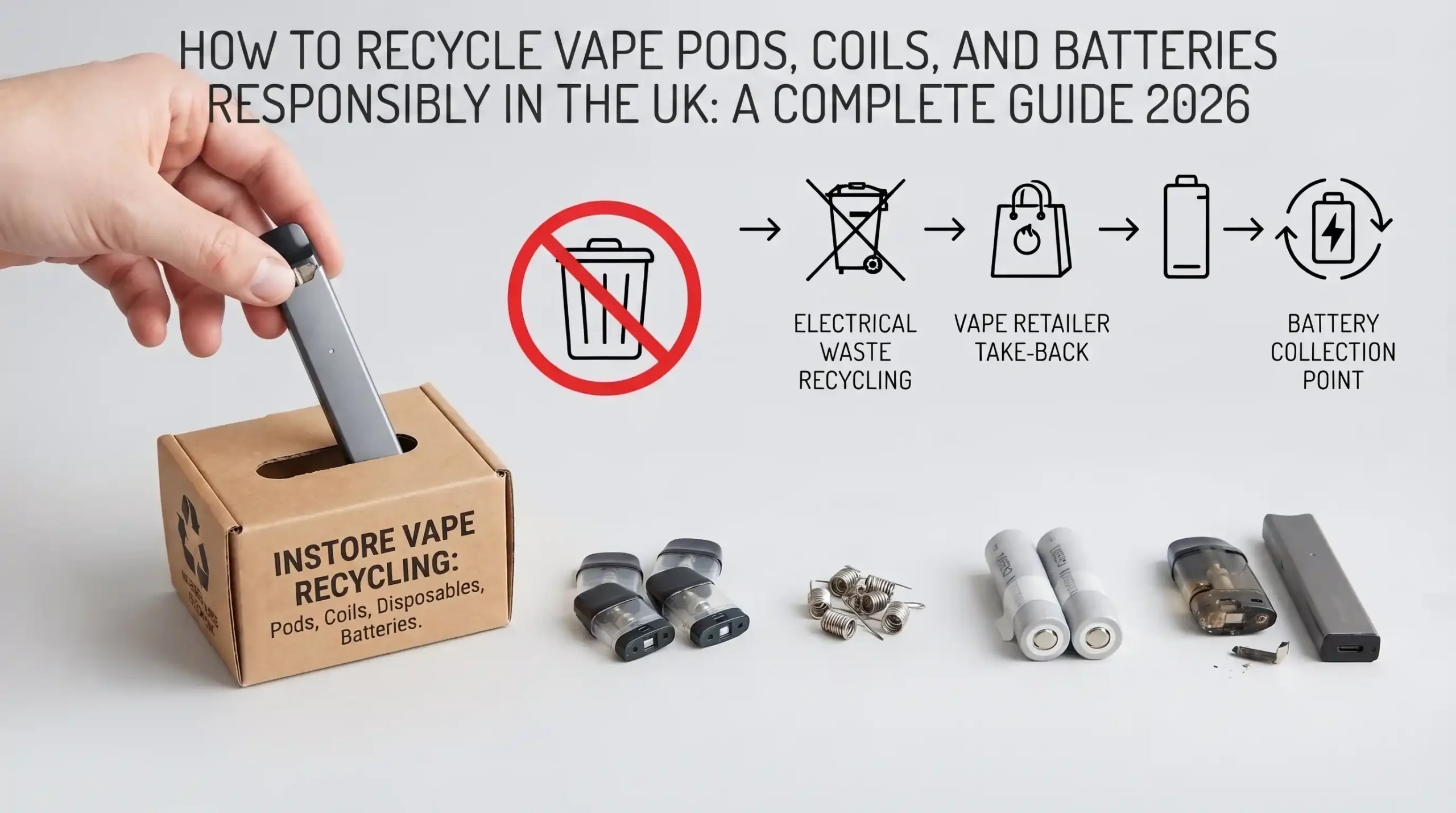
Dispose of the device safely.
Use a designated battery recycling point or WEEE collection point, not standard household waste.
How to Avoid Fake Vapes: Buying Safely from UK Retailers
Always buy from established UK vape retailers with a verifiable UK business address and a transparent supply chain. Avoid marketplace listings from unknown third-party sellers. These carry a significantly higher counterfeit risk than purchases from dedicated vape retailers.
Be suspicious of prices significantly below the standard UK market rate. Genuine products from compliant supply chains have a cost floor that counterfeits undercut. If a deal looks too good to be true, it usually is.
Authorised distributors work directly with brand manufacturers. They stock products that have cleared the MHRA notification process. These distributors have been vetted and are approved to sell genuine, compliant products.
Counterfeit Vape Inspection Checklist
Layer one, packaging: Print is sharp and clear with no blurring. No spelling mistakes anywhere on the box. Nicotine addiction warning covers at least 30 per cent of packaging. Full ingredient list present. Batch number and ECID or GB ID visible. Safety leaflet included. Tamper-evident seal intact.
Layer two, digital: QR code scans to an official brand domain. The verification page confirms product authenticity. Scratch code has not been revealed before on a sealed product. ECID or GB ID traceable on the MHRA database.
Layer three, physical: Device weight feels consistent with the genuine product. Build quality shows no flex, gaps or loose components. Pod engagement is secure. Charging does not produce excessive heat. Flavour is consistent and matches the expected profile. No unusual chemical taste or smell.
Counterfeit Vapes UK: Frequently Asked Questions
How do I know if my vape is fake?
Use the three-layer test. Check packaging for print quality, spelling and mandatory TPD elements. Scan the QR code and verify it leads to the official brand domain. Check the ECID or GB ID on the MHRA database. Assess the device physically for weight, build quality and flavour consistency.
Are counterfeit vapes dangerous?
Yes. They can contain unregulated ingredients and incorrect nicotine concentrations. These often exceed the 20mg UK legal limit. Low-quality components can lead to contamination with heavy metals, and unverified battery cells pose a fire risk. They are significantly more dangerous than legally compliant products.
How do I check a vape on the MHRA database?
Locate the ECID or GB ID number on the product packaging or safety leaflet. Search for it on the MHRA product notifications database, which is publicly accessible online. A product that does not appear in the database has not completed the mandatory UK notification process.
What should I do if I think I bought a fake vape?
Stop using it immediately. Watch for any unusual symptoms and contact your GP or NHS 111 if concerned.
- Report the product to Trading Standards via Citizens Advice.
- Report it to the MHRA via the Yellow Card scheme.
Can a fake vape explode?
Yes, they can. Counterfeit vapes use unverified battery cells. These often lack the safety protections required in regulated devices. These batteries can overheat, swell, and in serious cases, catch fire. This is a real risk and one of the primary reasons counterfeit vapes are considered dangerous.
Final Thoughts
Counterfeit vapes are more than just poor-quality imitations. They can pose serious risks to your health, safety, and vaping experience. While fake devices may seem like a bargain, they often lack proper quality control and use unknown ingredients. They also fail to meet UK safety regulations.
The best way to protect yourself is to buy from trusted UK vape retailers. Always verify authenticity using official QR or scratch codes. You should also inspect the packaging and device before use. A few simple checks can help you avoid counterfeit products and ensure you’re using a genuine, compliant vape.
At Vaping News, we’re committed to helping UK vapers make informed decisions. We provide expert guides, honest product insights, and the latest articles. Stay informed, shop smart, and always choose authentic products for a safer and more enjoyable vaping experience.